|
More Spin From RSB
Here is some antlerless harvest data RSB provided along with his usual spin that the habitat is limiting the deer herd instead of the high antlerless allocations and harvests.
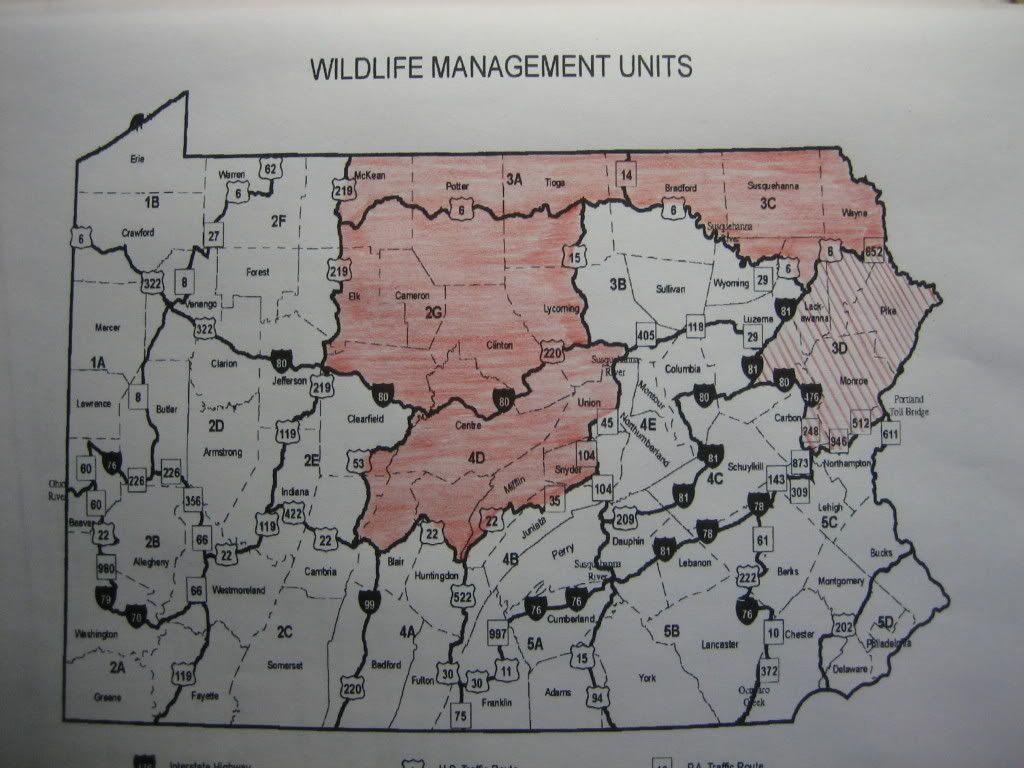
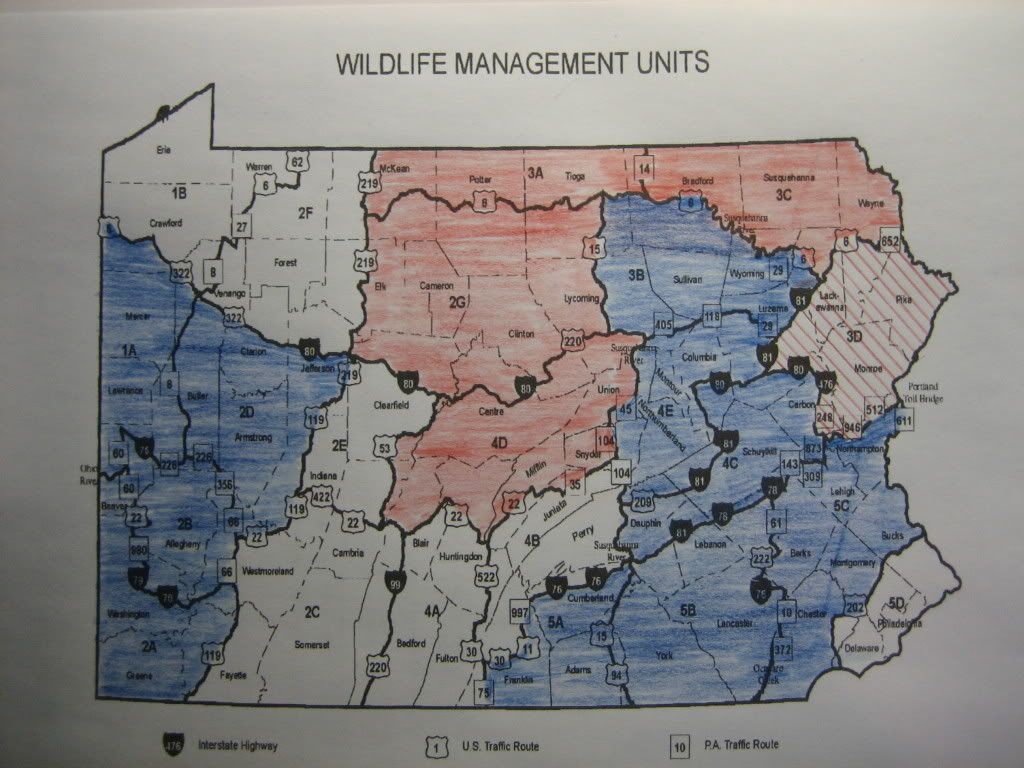
There has been so much talk about how the high doe harvests the past few years have ruined hunting in so many areas of Pennsylvania I decided to do some comparison research on the subject. With the method of deer management having changed in the past five years or so it has been hard for hunters to take an objective look at the harvests of today compared to the past because harvests are no longer provided by county and instead are only expressed by wildlife management unit. Most hunters believe that the harvests for their hunting area have been higher since the advent of concurrent buck/doe seasons and larger wildlife management units. The facts just don’t support that belief for many areas of the state though. To make the antler less deer harvest history comparable from the days of county allocations and the three day antler less seasons comparable to the concurrent seasons, by WMU, I took each county that makes up the WMU, combined their annual harvests, for each year into five year averages, and then divided it by the total square miles of land within the counties. That then makes the historic county doe harvest data comparable with the present day harvest data for the WMUs. I found that many of the northern tier, mountainous and typically poor soil area units had their highest doe harvests per square mile between fifteen and twenty years ago. In many of those unit’s the doe harvest since the concurrent seasons have been the lowest in the twenty five years and even longer. I am going to post a map of the WMUs with the units that had their highest harvests fifteen to twenty years ago shaded in red. One unit (3D) is just lined with red lines because the high harvest there was the period ten to fifteen years ago. Here are the harvest history results to go with the WMU map based on antler less harvests pre square mile for each time period with the highest harvest period indicated in red. I am also going to include the statewide averages here just for comparison purposes. Unit………………83-87.…………..88-92.………….93-97.…………….98-02.…………….03-07(WMU) 2G………………..3.98.……………5.48.… …………4.36.………………4.66.………â €¦……2.35 3A………………..4.80.……………6.52.… …………5.39.………………6.08.………â €¦……6.07 3C………………..3.59.……………6.22.… …………5.36.………………6.11.………â €¦……5.49 4D………………..3.39.……………5.25.… …………4.41.………………4.90.………â €¦……4.03 3D………………..2.77.……………3.99.… …………4.33.………………4.32.………â €¦……4.09 Statewide………..3.30.…………….4.93.…â €¦………5.07.………………5.81.………†¦……5.66 I would think it to be kind of hard to blame today’s low deer numbers on the high antler less harvests since the fact is that the high harvest years occurred between fifteen and twenty years ago. Given the fact that the white-tail deer is capable of nearly doubling its numbers every year where it has quality habitat is should be obvious that what is causing low deer numbers in the red areas of the state is more habitat and environmental conditions related then harvest related. I pretty much fail to see how anyone could even deny that fact since it is so obvious based on the antler less harvest history facts. Now lets look at a map that not only has the red areas with the highest harvests having been fifteen to twenty years ago but also the blue WMUs where the highest antler less harvests have occurred with the past five years. |
RE: More Spin From RSB
Why didn’t you post all of the information? didn’t the rest of it fit your misguided agenda? That is ok though, we pretty much expect that from you. Here is the rest of the information. There has been so much talk about how the high doe harvests the past few years have ruined hunting in so many areas of Pennsylvania I decided to do some comparison research on the subject. With the method of deer management having changed in the past five years or so it has been hard for hunters to take an objective look at the harvests of today compared to the past because harvests are no longer provided by county and instead are only expressed by wildlife management unit. Most hunters believe that the harvests for their hunting area have been higher since the advent of concurrent buck/doe seasons and larger wildlife management units. The facts just don’t support that belief for many areas of the state though. To make the antler less deer harvest history comparable from the days of county allocations and the three day antler less seasons comparable to the concurrent seasons, by WMU, I took each county that makes up the WMU, combined their annual harvests, for each year into five year averages, and then divided it by the total square miles of land within the counties. That then makes the historic county doe harvest data comparable with the present day harvest data for the WMUs. I found that many of the northern tier, mountainous and typically poor soil area units had their highest doe harvests per square mile between fifteen and twenty years ago. In many of those unit’s the doe harvest since the concurrent seasons have been the lowest in the twenty five years and even longer. I am going to post a map of the WMUs with the units that had their highest harvests fifteen to twenty years ago shaded in red. One unit (3D) is just lined with red lines because the high harvest there was the period ten to fifteen years ago. http://i151.photobucket.com/albums/s141/RBODENHORN/096.jpg Here are the harvest history results to go with the WMU map based on antler less harvests pre square mile for each time period with the highest harvest period indicated in red. I am also going to include the statewide averages here just for comparison purposes. Unit………………83-87.…………..88-92.………….93-97.…………….98-02.…………….03-07(WMU) 2G………………..3.98.……………5.48.……………4.36.………………4.66.…… …………2.35 3A………………..4.80.……………6.52.……………5.39.………………6.08.…… …………6.07 3C………………..3.59.……………6.22.……………5.36.………………6.11.…… …………5.49 4D………………..3.39.……………5.25.……………4.41.………………4.90.…… …………4.03 3D………………..2.77.……………3.99.… …………4.33.………………4.32.………………4.09 Statewide………..3.30.…………….4.93.…â €¦………5.07.………………5.81.………………5.66 I would think it to be kind of hard to blame today’s low deer numbers on the high antler less harvests since the fact is that the high harvest years occurred between fifteen and twenty years ago. Given the fact that the white-tail deer is capable of nearly doubling its numbers every year where it has quality habitat is should be obvious that what is causing low deer numbers in the red areas of the state is more habitat and environmental conditions related then harvest related. I pretty much fail to see how anyone could even deny that fact since it is so obvious based on the antler less harvest history facts. Now lets look at a map that not only has the red areas with the highest harvests having been fifteen to twenty years ago but also the blue WMUs where the highest antler less harvests have occurred with the past five years. http://i151.photobucket.com/albums/s141/RBODENHORN/097.jpg This should make it pretty clear that the majority of the recent high antler less harvests have come from the richer soil areas of the state and where adverse winter affects on the deer are not as much a factor. I am also going to include the harvest history for those blue WMUs so people can see the harvest history in those five year averages. Unit………………83-87.…………..88-92.………….93-97.…………….98-02.…………….03-07(WMU) 1A………………..3.11.……………4.96.… …………5.93.………………7.18.………â €¦……7.65 2A………………..3.34.……………5.67.… …………6.85.………………8.14.………â €¦……9.49 2B………………..2.73.……………4.98.… …………6.57.………………8.39.………â €¦…..10.70 2D………………..4.70.……………6.14.… …………6.97.………………8.26.………â €¦……8.53 3B………………..3.68.……………5.36.… …………4.78.………………5.15.………â €¦……6.07 4C………………..3.31.……………4.77.… …………4.89.………………5.53.………â €¦……5.94 4E………………..3.27.……………4.74.… …………4.39.………………4.94.………â €¦……5.68 5A………………..1.94.……………3.54.… …………3.53.………………4.20.………â €¦……4.42 5B………………..2.23.……………3.51.… …………3.96.………………4.71.………â €¦……4.84 5C………………..2.12.……………3.69.… …………5.08.………………5.84.………â €¦……7.94 I think it is interesting to note that some of these units have unlimited antler less license allocations and have had for about the past fifteen years and in spite of their antler less harvests consistently increasing their deer numbers are still high and obviously sustainable at the higher harvests that have occurred. Other units in this group have had comparatively lower harvests that still seem to be sustainable at those slightly increased harvests that have occurred the past five years. Perhaps some of those areas also have fewer deer today, but that was really the intended affect for many areas. The reduced deer numbers was planned to better match the deer numbers with their food supply, but I don’t see any major harvest increases in any of the units as compared to what the harvests had been when the same areas were managed as county units. The white, uncolored areas, of the of the map are the areas where the highest antler less deer harvests occurred between five and ten years ago. Even the locations of those units likely tells a story about the soils, habitat conditions and winter influence on the present deer numbers. I find it interesting that the colors pretty much all seem to fit patterns of habitat types with the exception of unit 5D which is kind of a totally different story altogether. Unit 5D is mostly city and highly residential with like habitat for deer and an area with unlimited antler less harvests. It is also possible that between the lose of habitat and increased hunter harvests unit 5D might actually have experienced a slight population reduction even though the harvest data indicates just a very slight reduction. Now the harvest history for the white areas where the highest antler less harvests were five to ten years ago. Unit………………83-87.…………..88-92.………….93-97.…………….98-02.…………….03-07(WMU) 1B………………..3.86.……………5.91.… …………6.39.………………7.43.………â €¦……5.96 2C….…………….3.21.……………5.07.… …………5.42.………………6.38.………â €¦……5.31 2E………………..3.84.……………6.14.… …………6.04.………………6.70.………â €¦……6.43 2F………………..4.63.……………5.87.… …………5.99.………………6.23.………â €¦……4.50 4A………………..3.15.……………5.02.… …………4.90.………………5.90.………â €¦……5.21 4B………………..2.76.……………4.61.… …………4.50.………………5.33.………â €¦……4.94 5D………………..1.43.……………2.69.… …………5.05.………………5.30.………â €¦……5.27 Based on the fact that the harvests in most of these units has been the equivalent the past five years as to what they had been during the ten year between the mid eighties and nineties when most people believe we had our best hunting years then we have to really wonder why the deer numbers of today are lower then back then. Once again remember we are talking about a species that can nearly double its numbers every year when they have suitable habitat and conditions. I think this is just one more piece of evidence that clearly proves that the environmental factors are having more influence on today’s deer numbers then hunter harvests have had. Some, probably many, will disagree with me about that theory but, realistically that seems to be the direction all of the real evidence leads use. Many will reject that concept simply because it isn’t what they want to believe even when the evidence is continuously becoming more convincing to those willing to objectively review the evidence. R.S Bodenhorn |
RE: More Spin From RSB
Why didn’t you post all of the information? didn’t the rest of it fit your misguided agenda? |
RE: More Spin From RSB
I think he's SPINNING counter clockwise.
|
RE: More Spin From RSB
A major factor is that the forest matured and now there is not the unlimited amount of browse like years ago.
|
RE: More Spin From RSB
ORIGINAL: bluebird2 Why didn’t you post all of the information? didn’t the rest of it fit your misguided agenda? Why I would guess that anyone that has a lick of commonsense would look at the harvest FACTS as evidence. In this case the FACTS, or evidence, very clearly prove that hunters have NOT harvested anyway near as many deer in units like 2G, and those other red areas, in recent times as they were fifteen to twenty years ago. I believe those facts pretty much shot a huge hole in your nonsense theories about how the low deer numbers of today is because hunters over harvested the deer though. After all the high doe harvests occurred fifteen to twenty years ago instead of during recent times. I don’t believe I have called anyone in the Game Commission a liar either, though I might very well point out something others hadn’t realized on an occasion or two. Sometimes other people within the agency do tend to worry about being more politically correct with their statements then I think they should be. I tend to just tell the real truth instead of telling people what they like to hear or what is politically correct. The fact is that the real evidence just keeps mounting that the deer numbers are much more controlled by the environmental factors then they are by the hunter harvests in many if not most areas of the state. Of course hunters still play a huge role in the total picture, especially when and wherethey fail to harvest enough deer to keep the deernumbers within the limits of their habitat and food supply. The evidence pretty clearly proves that the most assured way to have fewer deer in the future is to try keeping more deer then the habitat can long term sustain. That facts say that if the deer herd could have increased from harvesting fewer deer it surely would have done so after fifteen to twenty years of lower doe harvests. After all deer living in suitable habitat can very nearly double their own numbers each and every year. If they aren’t then there is something very wrong besides just hunters harvesting deer, especially when the population keeps declining following reduced doe harvests. Even the village idiot should be able to figure that out. R.S. Bodenhorn |
RE: More Spin From RSB
ORIGINAL: Coalcracker I think he's SPINNING counter clockwise. Do you have anything of substance to contribute or just wisecracks? R.S. Bodenhorn |
RE: More Spin From RSB
ORIGINAL: livbucks A major factor is that the forest matured and now there is not the unlimited amount of browse like years ago. Bingo, we have a winner here! R.S. Bodenhorn |
RE: More Spin From RSB
ORIGINAL: RSB ORIGINAL: Coalcracker I think he's SPINNING counter clockwise. Do you have anything of substance to contribute or just wisecracks? R.S. Bodenhorn When the forest regenerated after the massive timbering, we had few deer and a lot of browse, so they had to stock deer from out of state. The browsing stage can support a lot of deer, but only for around 15 years, then it goes to pole timber, which can support the least deer. Oaks start to produce mast crop (which is considered browse, by the way) after around 30 years of age, which blows your theory right out of the water, as the forest has been the same for almost 70 years. That means the antlerless deer allocation is responsible for the decrease in the deer numbers. But those of us that have been reading your posts over the last few years, know that you want to keep the herd at levels when the mass crop is poor. |
RE: More Spin From RSB
ORIGINAL: livbucks A major factor is that the forest matured and now there is not the unlimited amount of browse like years ago. |
RE: More Spin From RSB
ORIGINAL: Coalcracker ORIGINAL: livbucks A major factor is that the forest matured and now there is not the unlimited amount of browse like years ago. |
RE: More Spin From RSB
ORIGINAL: livbucks A major factor is that the forest matured and now there is not the unlimited amount of browse like years ago. Since 1980 the PGC has been trying to manage the herd at densities that are below the true MSY carrying capacity of the habitat, But from 1980 to 2000 the herd increased to over 1.6 PS deer,which represented the true MSY carrying capacity of the habitat. That fact is confirmed by the fact that breeding rates and productivity decreased as the herd was reduced by 35-40%. So,there is no doubt the quality of the habitat decreased significantly from 1925 to 1945 , the quality of the habitat has been relatively constant over the last 30 years . Therefore, it is blatantly obvious that it is the antlerless harvests that have been controlling the herd and which resulted in a 46% decrease in our buck harvest. |
RE: More Spin From RSB
Acorns are considered browse and they come from a mature forest. Steve |
RE: More Spin From RSB
Thanks RSB for a well prepared, well presented, factual perspective on the doe harvests. Till now, I think most of us hadn't taken the time to compare the harvests by county vs WMU in an objective way and you have taken a lot of time to do just that. I find it amazing that anyone, even Bluebird, could call what you posted "spin"
You have found a way to fairly compare the apples and oranges and busted the myth that doe harvests alonehave been the limiting factorsince we went to WMU's and concurrent seasons. |
RE: More Spin From RSB
You aren't even close to being right. If RSB wanted to provide a factual representation of the antlerless harvests he would have provided the yearly antlerless allocations along with the yearly harvests , rather that using 5 year averages which tend to mask the correlation between the harvests and the decrease in the herd.
Even with the data RSB posted , it is clear that five years of high doe harvests resulted in lower harvests the next five years. How RSB can ignore that obvious correlation and accuse the deer management team of misleading the hunters is beyond me. To further support my position, here is a quote from the PGC regarding the effects of the antlerless harvests. To further deal with inadequate har vests, in 1988 the Commission imple mented the statewide “bonus deer program,” successfully piloted in the southeast special regulations area the previous year. For the first time hunters could take more than one deer per year. The agency allocated 679,300 antlerless licenses. Under the new program, unsold antlerless licenses were issued as “bonus tags” three weeks after license sales began – and the entire allocation was issued. Since 1988, the agency in creased antlerless allocations, and hunter harvests in subsequent years not only stopped the growth of the herd on a statewide basis, but reduced it by about 15 percent as of winter, 1993-94. Here is another interesting quote that shows RSB is just blowing smoke. h – "Normally a deer herd expands in size by about 30 percent per year through reproduction. If losses are smaller than that figure, the size of the herd will increase. The annual antlered deer harvest accounts for only some 12 to 15 percent of the herd, and if the total population is to remain at a constant level, it is necessary to remove an additional 12 to 15 percent through antlerless harvests. Elimination of the antlerless season would produce an explosion in whitetails that would soon get out of hand." – Game Commission biologist Dale Sheffer, Report to PFSC in 6\80 PA Game News |
RE: More Spin From RSB
For those of you that think five year averages tell the story, do a five year average on your 401k plan blances.
|
RE: More Spin From RSB
In wildlife management, no measuring method is perfect. 5 year averages simply even out fluctuation in the annualnumbers from varying factors like weather, etc. Anyone who would criticize using avearges over annual numbers simply doesnt understand scientific wildlife management. Or in the case of the 401K comparison, it shows a lack of understanding of long term financial planning as well.
|
RE: More Spin From RSB
A five year average is useless on a declining harvest and herd, at best and only for information, a three year rolling average could be used for statistical purposes only. I suggest you look at PA harvests for the last five years, they are on a steady decline, which makes averaging a mute point.
Yes my point on the 401k plan showed no information, it was to demonstrate how useless a five year average is in deer management. As I worked in Accounting, Budget and Forcasts for over 30 years, I know a tad about investments and long term outlooks. But under the current conditions of our economy, it's hard to tell the baby boomer to just hang in there. I would that most people know what happens to their common stock, when a company files for bankruptcy. |
RE: More Spin From RSB
ORIGINAL: bluebird2 You aren't even close to being right. If RSB wanted to provide a factual representation of the antlerless harvests he would have provided the yearly antlerless allocations along with the yearly harvests , rather that using 5 year averages which tend to mask the correlation between the harvests and the decrease in the herd. Even with the data RSB posted , it is clear that five years of high doe harvests resulted in lower harvests the next five years. How RSB can ignore that obvious correlation and accuse the deer management team of misleading the hunters is beyond me. To further support my position, here is a quote from the PGC regarding the effects of the antlerless harvests. To further deal with inadequate har vests, in 1988 the Commission imple mented the statewide “bonus deer program,” successfully piloted in the southeast special regulations area the previous year. For the first time hunters could take more than one deer per year. The agency allocated 679,300 antlerless licenses. Under the new program, unsold antlerless licenses were issued as “bonus tags” three weeks after license sales began – and the entire allocation was issued. Since 1988, the agency in creased antlerless allocations, and hunter harvests in subsequent years not only stopped the growth of the herd on a statewide basis, but reduced it by about 15 percent as of winter, 1993-94. Here is another interesting quote that shows RSB is just blowing smoke. h – "Normally a deer herd expands in size by about 30 percent per year through reproduction. If losses are smaller than that figure, the size of the herd will increase. The annual antlered deer harvest accounts for only some 12 to 15 percent of the herd, and if the total population is to remain at a constant level, it is necessary to remove an additional 12 to 15 percent through antlerless harvests. Elimination of the antlerless season would produce an explosion in whitetails that would soon get out of hand." – Game Commission biologist Dale Sheffer, Report to PFSC in 6\80 PA Game News All anyone wanting to know what the truth is would have to do is look a the data and colors on the maps I provided and then think it through with some rational thoughts. The deer harvest history is what it is and there is no way for that data to do anything but provide the facts concerning when the highest antler less harvest actually did occur. Those areas in red clearly show that the highest harvests occurred there between fifteen and twenty years ago. That isn’t a lie, it is a fact based on real data. No matter how much you don’t like the data and no matter how much you wish it weren’t true that data clearly proves you are wrong about hunter harvests being the only, or even the most influential, factor controlling deer populations. It is you who does the spinning. Explain to us just how providing real deer harvest data could be considered as spinning things. It is what it is and no one can change the facts it provides. Your understanding and explanation of the forest growth history and levels of change for this part of the state were seriously lacking in realism too, but that is a matter for another thread and another time. Both DCE and BT Bowhunter had much more factual and realistic explanations for how the deer densities will change over relatively short time periods with an area. R.S. Bodenhorn |
RE: More Spin From RSB
All anyone wanting to know what the truth is would have to do is look a the data and colors on the maps I provided and then think it through with some rational thoughts. No matter how much you don’t like the data and no matter how much you wish it weren’t true that data clearly proves you are wrong about hunter harvests being the only, or even the most influential, factor controlling deer populations. is you who does the spinning. Explain to us just how providing real deer harvest data could be considered as spinning things. It is what it is and no one can change the facts it provides. Some of the antlerless harvests in Elk county occurred in 1988,89 and 90 and the PGC said the harvests during that period reduced the herd by 15%. 1988-4899 1989-4353 1990-5300 Now , just 10 years later the Elk Co harvests were: 1998-2600 1999-2100 2000-2969--- This was the start of the current HR effort. Then we have 2002 and 2003!!! 2001-4387 2002-3200 Now ,everyone can see the second highest antlerless harvest in the last 20 years occurred in 2001, instead of 20 years ago!!! And that harvest occurred after the herd had been reduced to 14 or less OWD PSM!! Now inquiring minds might ask what was the OWDD in 1987 and the answer is 33 DPSM!!!!!! |
RE: More Spin From RSB
 |
RE: More Spin From RSB
Thanks for pointing out more pgc lies RSB. The herd had been reduced by 50% ow in the wmu 2A since its all time high until supposedly that all changed a few years ago andAccording to the game commission the goal for 2A has been supposedly to stabilize the herd, not reduce it since 2004. Your table clearly shows that the harvest simply cannot allow that to be true as it has continued to grow thanks to increasing tags by 10000 from 2004 and the harvest rose accordingly as shown in your chart. Can you say b.s.?
Unit………………83-87.…………..88-92.………….93-97.…………….98-02.…………….03-07(WMU) 1A………………..3.11.……………4.96.… …………5.93.………………7.18.………â €¦……7.65 2A………………..3.34.……………5.67.… …………6.85.………………8.14.………â €¦……9.49 2B………………..2.73.……………4.98.… …………6.57.………………8.39.………â €¦…..10.70 2D………………..4.70.……………6.14.… …………6.97.………………8.26.………â €¦……8.53 3B………………..3.68.……………5.36.… …………4.78.………………5.15.………â €¦……6.07 4C………………..3.31.……………4.77.… …………4.89.………………5.53.………â €¦……5.94 4E………………..3.27.……………4.74.… …………4.39.………………4.94.………â €¦……5.68 5A………………..1.94.……………3.54.… …………3.53.………………4.20.………â €¦……4.42 5B………………..2.23.……………3.51.… …………3.96.………………4.71.………â €¦……4.84 5C………………..2.12.……………3.69.… …………5.08.………………5.84.………â €¦……7.94 You cannot tell me or any other rational individual that 8.14 or lesshad REDUCED the herd, yet now 9.49 is only stabilizing it. |
RE: More Spin From RSB
Apparently RSB is busy digging his hole even deeper. He was half way to China on Monday and he wants to get to China by the end of the concurrent season. I find it extremely ironic that the worst managed WMUs are producing the highest harvest and the best managed WMUs like 2G are producing the lowest deer harvests.
On the other hand , he may be working on 10 year averages to cover up the effects of the antlerless harvests. |
RE: More Spin From RSB
ORIGINAL: bluebird2 All anyone wanting to know what the truth is would have to do is look a the data and colors on the maps I provided and then think it through with some rational thoughts. No matter how much you don’t like the data and no matter how much you wish it weren’t true that data clearly proves you are wrong about hunter harvests being the only, or even the most influential, factor controlling deer populations. is you who does the spinning. Explain to us just how providing real deer harvest data could be considered as spinning things. It is what it is and no one can change the facts it provides. Some of the antlerless harvests in Elk county occurred in 1988,89 and 90 and the PGC said the harvests during that period reduced the herd by 15%. 1988-4899 1989-4353 1990-5300 Now , just 10 years later the Elk Co harvests were: 1998-2600 1999-2100 2000-2969--- This was the start of the current HR effort. Then we have 2002 and 2003!!! 2001-4387 2002-3200 Now ,everyone can see the second highest antlerless harvest in the last 20 years occurred in 2001, instead of 20 years ago!!! And that harvest occurred after the herd had been reduced to 14 or less OWD PSM!! Now inquiring minds might ask what was the OWDD in 1987 and the answer is 33 DPSM!!!!!! Ok, so you figure, by using your yearly harvest data, that hunters harvesting half as many antler less deer in Elk County for nearly a decade means that hunters couldn’t harvest as many for as they did back in the eighties for even two year without causing the deer numbers to plummet for the next five years? That is interesting to say the least. It is very incorrect but interesting none the less. It sure doesn’t make even a lick of sense though unless there was something other then hunters reducing the deer numbers through all of those years when hunters weren’t harvesting but half as many as they had been for years before. What do you suppose happened to all of those deer the hunters weren’t harvesting for all of those years when hunters were only harvesting half as many as they had been before? You don’t figure aliens where stealing the deer hunters didn’t harvest or that they were migrating from Elk to Allegheny or Greene County do you? Or, do you believe those deer are still hiding here somewhere in Elk County and the hunters just can’t see them? The fact is the hunters didn’t harvest them when they reduced the antler less harvests to only half of what the harvests once were and the deer are now gone; so where did they go since your harvest results for Elk County clearly show the hunters didn’t harvest them? You don’t seem to think the environmental conditions result in reduced deer recruitment and naturally declining deer populations so explain why the deer numbers didn’t explode with nearly a decade of greatly reduced doe harvests here in Elk County. Just keep on posting your nonsense it is getting easier for the reasonable people to see how far off base you are with your misguided agenda every day. R.S. Bodenhorn |
RE: More Spin From RSB
"Apparently RSB is busy digging his hole even deeper. He was half way to China on Monday"
TheChinese are generally an educated society as far as math and such, so I dont think they would buy iteither.When 2A's higher deer densities/numbers according to pgc annual reports weremuch higher between1998 and 2002 than the 03-07 group of years,but our harvest thanks too many more doe tags isFAR higher from 03-07 than it was from 1998-2002....As shown on RSB's fine chart....It doesnt take a rocket scientist to figure out pgcs claim of stabilization after 2004 is as bogus as it gets. Do you think "reasonable people" will be able to understand THAT Rsb? ;):D |
RE: More Spin From RSB
What do you suppose happened to all of those deer the hunters weren’t harvesting for all of those years when hunters were only harvesting half as many as they had been before? You don’t figure aliens where stealing the deer hunters didn’t harvest or that they were migrating from Elk to Allegheny or Greene County do you? Or, do you believe those deer are still hiding here somewhere in Elk County and the hunters just can’t see them? That is just about as dumb as it gets on the MB. The deer hunters weren't harvesting those deer, because they weren't there to be harvested, because the previous harvests reduced the OWDD and recruitment. You don’t seem to think the environmental conditions result in reduced deer recruitment and naturally declining deer populations so explain why the deer numbers didn’t explode with nearly a decade of greatly reduced doe harvests here in Elk County. BTW, I accept your apology for misleading readers regarding when the high antlerless harvests occurred.:) |
RE: More Spin From RSB
Perhaps it will require quoting Grundsow from that PGC site. Grundsow supports AR & HR and took RSB to task for trying to blame the habitat for everything.
|
RE: More Spin From RSB
Because the reduced harvest still equaled or exceeded recruitment |
RE: More Spin From RSB
Why was recruitment low??? Maybe habitat was able to support few deer. |
RE: More Spin From RSB
didn't improve after the herd was reduced I've seen major changes in habitat in the last 10 yrs where I hunt. Corn and alfalfa fields have turned to golden rod. This was good during the mid to late 90s, but by 2002-2003 it started to make an impact on the overall deer population. We had some brutal winters from 92-98, but the deer population was as high as ever. The 90s still had a good blend of ag and wild secession. But, most of the ag went completely away 2002-2005. Guess what, 5-10 yrs ago it wasn't uncommon to see 6-8 different bucks (with a couple 2.5-3.5 yo mixed in) and 12-15 does during a bow season, now I literally see half as many. Multiply this by 3 or 4 different properties I hunt. That was a lot of deer.Most of the does had twins or triplets 10 yrs ago, now I see 1.5-2.5 yo does that are just wondering around without fawns. The does that do have fawns only have one. What changed? They aren't killing that many more does in my area. They aren't giving the does abortions. They have simply fallen back to the caring capacity. This can happen quicker than you think. Again, if doe kill is the only factor, why does the deer population continue to flurish in Ohio(liberal doe kill), and why aren't the Adirondacks (almost no does killed) crawling with deer? My brother lives in Ohio on 80 acres, has killed over 15 does the last 3 years, and his overall doe population is increasing. His has a perfect blend of ag and natural habitat. He and his neighbors can't kill enough does. Almost all of the does have twins and triplets in the spring. |
RE: More Spin From RSB
I've seen major changes in habitat in the last 10 yrs where I hunt. Corn and alfalfa fields have turned to golden rod. This was good during the mid to late 90s, but by 2002-2003 it started to make an impact on the overall deer population. We had some brutal winters from 92-98, but the deer population was as high as ever. The 90s still had a good blend of ag and wild secession. But, most of the ag went completely away 2002-2005. Guess what, 5-10 yrs ago it wasn't uncommon to see 6-8 different bucks (with a couple 2.5-3.5 yo mixed in) and 12-15 does during a bow season, now I literally see half as many. Multiply this by 3 or 4 different properties I hunt. That was a lot of deer. Most of the does had twins or triplets 10 yrs ago, now I see 1.5-2.5 yo does that are just wondering around without fawns. The does that do have fawns only have one. What changed? They aren't killing that many more does in my area. They aren't giving the does abortions. They have simply fallen back to the caring capacity. This can happen quicker than you think Again, if doe kill is the only factor, why does the deer population continue to flurish in Ohio(liberal doe kill), and why aren't the Adirondacks (almost no does killed) crawling with deer? My brother lives in Ohio on 80 acres, has killed over 15 does the last 3 years, and his overall doe population is increasing. His has a perfect blend of ag and natural habitat. He and his neighbors can't kill enough does. Almost all of the does have twins and triplets in the spring. |
RE: More Spin From RSB
I'm trying to tell you, even if they never killed another doe in these areas, you may not see a significant population increase...ever. I don't expect to see 100+ deer a season like I did 10-12 years ago. If I see 30% of that in a season, I'm happy. As long as I see the right one. NY, PA, OH, or Venus, it all works the same, no food, no deer. Throw in a little extra predation from coyotes on fawns, and the population balances out. Granted you could wipe out the population with unlimited hunting, but we have seasons, most of which haven't changed dramatically in the past 20 yrs. Golden rod is not as nutritious as corn, soy beans, clover and alfalfa. In forested habits, a good mast crop a couple years in row might give you a little boost in deer population. But deer have to compete with squirrel, turkey, chipmunks, mice, and other birds for mast.
Part of this is sociological, people want to see deer even if they can't kill them. Its a bragging thing, "I saw 30 deer this year" sounds better than "I only saw 8 deer this year". Is the guy who saw 30 a better hunter than the guy who saw 8? Many people wrongly think so. It boils down to whats best for the overall herd, not the hunter. Its funny, many people on this board fear Obama's socialist regulation of government, i.e. guns. Yet we want the government to tell us which deer to shoot (AR). Huh? A bit ironic. Like I said, deer managment is at the tip of your trigger finger. |
RE: More Spin From RSB
I'm trying to tell you, even if they never killed another doe in these areas, you may not see a significant population increase...ever. |
RE: More Spin From RSB
Define over harvest as it pertains to the area you are talking about. Can you prove the population is significantly below carrying capacity? Again, you miss the point, even with an excess harvest, deer populations will bounce back within 2-3 seasons if optimal habitat exists. Did you ever think the population was too high, and a correction was needed for the available habitat and a healthier herd? Maybe things are closer to what the proper balance should be.
AR's work great if you want to kill off the 2.5-3.5 bucks just when they're getting to a good breeding age. That's it, kill the basket racks, and let the forks and spikes breed the does. It's stupid to regulate "what" you kill, it much more important to limit how many bucks you kill. In most states, including my state of NY the buck harvest is way too high. If your interested in better bucks only 2 things work: 1 buck per season and self control. |
RE: More Spin From RSB
OMW... Carrying capacity is the key.. my farm has been overbrowsed for years... the deer get so hungry they eat the cat food on the porch... PA is the most backwards place I have ever lived when it comes to change... Gary Alt was right.. and he was not permitted to finish... no one bothered him on bears when he was fixing that and now due to his efforts there are plenty of bear.. Deer get some much attention they caused focus that drove him out.. I don't blame the man...
I have hunted all over and PA is still in Jurasic Park with regards to deer management... Doe reduction is needed.. It helps.. I have seen and harvested better bucks on our farm over the last 6 yrs than ever before.... All the BS about no deer is just that...BS... Look at states where the deer herd is managed for quality.... or elk in Colorado vs other states Colorado is managed for volume not quality with the exception of a few areas... they got plenty of elk but not a lot of biggins...New Mexico humm.. biggins... hell you guys re-elected Murtha again... and he called us all rednecks and racists... talk about an idiot... let the biologists do their jobs and deal with it for a few years.. it will be better... Georgia kills a ton of does.. you get7 doe tags and a buck.. .. Alabama look at those rules... we have plenty of deer in PA.. |
RE: More Spin From RSB
Sounds like bluebird was the campaign manager for Murtha... dude you are so far from on track...try reading a book... USA Today is not an dictionary.... his data is very very moving..
PA is not an agricultural state.. I live in a farming area and our farm along with all of the others on our road are shut down.. we boys left and had to get jobs to pay for stuff... along my road over 2500 acres is DORMANT... nothing but weeds.. Acorns are not every year... years ago when you are citing your stats there was a far greater agricultural base and farming left food..... Now that is dead.. Our state is like Ill or Ohio but minus the volume of farming... Have you hunted in Ill or Ohio?? It is fantastic.... I'm tired of this.. BS... that is why I left there some many years ago... I kept the farm but with progress like this it will probably be a subdivision soon... |
RE: More Spin From RSB
ORIGINAL: bluebird2 Why was recruitment low??? Maybe habitat was able to support few deer. You don’t have a clue what you are talking about. Breeding rates and fawn recruitment were both horrible in many areas of the state prior to antler restrictions. Fawn recruitment is still horrible in much of the state though it and the breeding rates have improved some in this part of the state. The recruitment rates are still almost completely influenced by the annual changes in the winter and environmental conditions for the year though. That is exactly what the map and data I presented in the beginning of this topic proved even though you obviously weren’t open minded or intelligent enough to grasp it. R. S. Bodenhorn |
RE: More Spin From RSB
ORIGINAL: bluebird2 I'm trying to tell you, even if they never killed another doe in these areas, you may not see a significant population increase...ever. No the history of the herd, the harvests and the habitat prove he is right and you are wrong. It is obvious that cnyguy and cuernos1 are both light years ahead of you in their knowledge of sound wildlife management principles. BT bowhunter and DCE had proven they are light year ahead of you a long time ago as well. R.S. Bodenhorn |
RE: More Spin From RSB
No the history of the herd, the harvests and the habitat prove he is right and you are wrong. Fawn recruitment is still horrible in much of the state though it and the breeding rates have improved some in this part of the state. The recruitment rates are still almost completely influenced by the annual changes in the winter and environmental conditions for the year though. That is exactly what the map and data I presented in the beginning of this topic proved even though you obviously weren’t open minded or intelligent enough to grasp it. The PGC experts say that based on breeding rates , the herd is at it's target goal for herd health in all but one WMU,so once again you are just blowing smoke. The only reason recruitment is horrible in 2G is because there are so few OW doe producing fawns. If fawn recruitment is as terrible as you claim, why isn't the PGC trying to reduce the herd even more in order to improve recruitment? Could the answer be that it didn't work in the past ,so there is no reason to expect it to work now? |
RE: More Spin From RSB
Define over harvest as it pertains to the area you are talking about. Can you prove the population is significantly below carrying capacity? Again, you miss the point, even with an excess harvest, deer populations will bounce back within 2-3 seasons if optimal habitat exists. Did you ever think the population was too high, and a correction was needed for the available habitat and a healthier herd? Maybe things are closer to what the proper balance should be Even with optimal habitat a population will not recover when the PGC issues enough antlerless tags to produce a harvest that equals or exceed recruitment. |
| All times are GMT -8. The time now is 08:28 AM. |
Copyright © 2026 MH Sub I, LLC dba Internet Brands. All rights reserved. Use of this site indicates your consent to the Terms of Use.