


YNP Wolf Expert
 01-14-2014 | 07:11 PM
#1
Thread Starter
Fork Horn
Joined: Jun 2007
Posts: 349
Likes: 0
 YNP Wolf Expert
http://www.mtpioneer.com/2014-Januar...ne-Expert.html
Top Yellowstone Expert Takes on the Wolf Critics
Speaks to “Non Native Subspecies” Charge and “Surplus Killing”
01/05/14
Recently, the Montana Pioneer spoke with Doug Smith, Yellowstone National Park Wolf Project Leader and Senior Biologist at the Yellowstone Center for Resources, about the nature of the wolves introduced to Yellowstone National Park in 1995, including the “non native subspecies” charge advanced by critics, and about ongoing research on wolves in the park.
MP: What were the genetic sources of wolves introduced into YNP—where did the existing wolf population originate?
DS: Forty one wolves were introduced to YNP in 1995. There were 14 in 1995 from Alberta, and 17 in 1996 from British Columbia, and 10 in 1997 from near Choteau, Montana. We have genetic evidence that some of those wolves went on to breed. So, 10 of the wolves that were introduced were from Montana, and 31 were from Canada.
MP: What were the main characteristics that were different between the wolves from Canada and the wolves that pre-existed here in Yellowstone, say 150 years ago? Is that known?
DS: Not really. All we have are skulls to judge it from. What we know from studying the skulls are that the wolves are essentially the same. The Canadian wolves were about 7 to 8 percent larger than the pre-existing wolves of Yellowstone. Seven to eight percent is within the variation of size difference found in wolf skulls all over North America, so the difference is statistically insignificant. It is important to compare apples to apples, so-to-speak. Pups and immature animals are smaller, and males are about 20 percent larger than females, at full size. It is important to compare similar age and gender skulls to each other. So comparing the handful of skulls that were preserved here as museum samples with over 150 skulls of wolves that have died here since they were introduced, the skulls are essentially the same, but the ones from Canada are slightly bigger.
Taxonomically (classifying in categories such as genus, species, and subspecies), you get differences between species when there are limitations on their ability to mix genetically. Wolves are stopped by nothing. They will cross mountain ranges, rivers, even pack ice. That's how good this animal is at moving around. So what we have is this constant intermixing of genes that prevents them from becoming really different subspecies. Wolves origin-ated in North America a couple of million years ago. When glaciers connected Alaska and Russia, they crossed over into Russia. They got bigger over there. In the last 600,000 to 700,000 years differently evolved wolves have crossed back to North America in three waves. The remnants of the oldest wave of wolves returning to North America are now the most southern species, and also the smallest, Canis lupus baileyi, the Mexican wolf. The middle wave of evolved wolves returning to this continent from Asia are the gray wolves we have here now, and the most recent are the largest, the arctic wolves.
MP: Were the wolves introduced into YNP significantly different physically or behaviorally from the wolves that were here?
DS: The short answer is no. Wolves are ecological generalists. They can live on a variety of things. We looked for wolves that were previously exposed to bison and elk. The Canadian wolves had a small percentage of bison hair in their scat, but primarily elk and deer hair. We thought that was ideal, as that is the same diet—primarily elk and deer—as we have here. The available wolves from Minnesota had no experience with mountainous terrain or herds of elk or bison. We selected wolves from the same Rocky Mountain ecosystem, with the same kind of prey, to enhance the likelihood of the introduced wolves surviving. I want to clarify the misconception that larger Canadian wolves were preying on smaller American elk [thereby reducing the elk population inordinately]. In fact, the much smaller southwestern Mexican wolf brings down elk. The elk the Mexican wolves prey on in Arizona and New Mexico originally came from Yellowstone, as did the elk in Canada. The optimal number of adult wolves necessary to bring down an elk is only four, but a pair of wolves can also kill an elk.
MP: We hear reports that there were wolves already in Yellowstone that could have multiplied without reintroduction.
DS: There were no wolves here when we introduced the current wolves in 1995. There were no specially adapted wolves [as critics have claimed] in Yellowstone that did not run in packs, or use trails or roads, that didn't howl, and that preyed on small prey, unlike the wolves we have now. There has simply never been a wolf recorded anywhere that lives like that. Furthermore, there is no better bird dog for a wolf than a wolf itself. We had radio collars on all 41 wolves we released over a 3-year period. If there were extant wolves already on the landscape, they would have found them. The wolves we released never turned up any other wolves, dead or alive. And by the way, they rarely eat other wolves that they kill.
MP: Wolves killing other wolves is the main cause of wolf deaths in the park, correct?
DS: Yes, almost half of the 15 YNP wolves that died in 2012 were killed by other wolves. However, for wolves living outside the park, 80 percent of the wolf deaths are caused by humans, mostly by shooting them.
MP: How many wolves are in YNP now?
DS: Last year at the end of 2012 there were at least 83 wolves occupying YNP in 10 packs (6 breeding pairs). This is approximately a 15 percent decline from the previous three years when the numbers had stabilized at around 100 wolves. Wolf numbers have declined by about 50 percent since 2007, mostly because of a smaller elk population.
MP: Would the 1994 population of gray wolves that lived in Montana have naturally recovered, given the protection of the Endangered Species Act?
DS: That was a big opinion-based debate by wolf biologists at the time, led by Bob Ream of the University of Montana. In his opinion, wolves would have recovered given enough time—50, 60 or 70 years. Other people think they would not have made it. Yellowstone National Park and the five National Forests around it can be likened to a huge island. It's the most impressive wild land we have got in the lower 48, and some people say it's the most impressive temperate zone wild land in the world. But it's got an abrupt boundary to it. I frequently fly over here in an airplane, and at the boundary of a National Forest, it turns into a sea of humanity. And wolves are notoriously bad at getting through seas of humanity. Wolves get shot a lot. When we were dealing with a handful of wolves, maybe 40 to 60, how many of those would have been heading this way? So far, we have not yet documented a wolf coming from northwest Montana into Yellowstone. We have documented them coming from Idaho, but that's a lot closer and the linkages are better, primarily in the Centennial Mountains. Wolves don't do well over huge landscapes dominated by people. By introducing wolves they were legally not a fully protected species under the Endangered Species Act. People wanted to be able to shoot them when they got into livestock, which they could not have done if they were a fully protected species.
MP: Wolves from Idaho have now invaded the original Glacier National Park wolves, right?
DS: The Idaho wolf population is now fully connected to the northwest Montana wolf population. Interest-ingly, a study of historic wolf DNA from pelts and skulls shows that over 50 percent of wolf genetic diversity was lost when the continental United States population was reduced to a few hundred wolves in Minnesota. Wolves were the top carnivores in North America. Wolves evolved to adapt to the local conditions, and they will do so again.
MP: The tapeworm cysts spread by wolves that critics rail about, what risk to humans does this pose?
DS: The Echinococcus granulo sus tapeworm was already here. Wolves didn't bring it in. The coyotes, foxes and domestic dogs likely had it before wolves. The human health risk from tapeworms is almost nil. If anyone should have Echinococcus tapeworm it's me. I've handled over 500 wolves in my career. I take their temperature with a rectal thermometer. That's where the tapeworm eggs come out. I now wear rubber gloves, but I wash my hands in snow, then eat my lunch. I wouldn't worry much about it.
MP: What are the primary benefits and disadvantages of having wild ranging wolf packs in the Northern Rockies?
DS: The simplest way to answer that is that there is no question that wolves made people's lives more complicated, and that's a good reason not to have them. Some people love them, some people hate them, and wolves are a polarizing animal. People have to spend a lot of time dealing with the controversy that comes with wolves. Life is simpler without wolves. I admit that if you are a rancher, having wolves around is worrisome. I understand that it's not just the cows they kill; it's the sleepless nights. I think that's the best argument to not have them.
What's the ecological value of wolves? I don't know. It's a human dominated world. We control everything. So why do we need wolves? Landscapes look the way they do because of agriculture, forestry, hunting, mining, development—all those things trump things like wolves. So you really don't get huge ecological benefits of wolves outside of National Parks. In National Parks you do. So why have wolves on these huge landscapes where there are people? Good question. The best answer is, because people want them there. You know, there are a lot of people that don't like wolves. There is an equally large number that do like them, because living in Idaho, Montana and Wyoming is unique and different than living in places like Illinois, Iowa and Arkansas. You have grizzly bears, you have wolves, you have cougars. And that brings in a lot of tourism dollars. Wolves and grizzly bears are the two top attractions to Yellowstone. Idaho, Montana and Wyoming are perceived as being pristine, just because of the mere existence of the three large, toothy carnivores. It makes visiting or living here more valuable and a better experience. Economics are more important than ecology when it comes to carnivore populations in Yellowstone National Park.
Right now, it's as natural as it's ever been in Yellowstone Park. Now we have more predators than we have ever had, which means we have fewer elk, and fewer elk means we have all these other ecological benefits, like beavers and songbirds and fishes, and generally enhanced riparian habitat, because fewer elk means less browsing of riparian habitat. So it's a more balanced ecosystem. We only get that because we have natural densities of carnivores. As soon as you cross the park line, all the densities of those carnivores go down because humans manage them. And that is fine; it's not a criticism. The carnivores are on the landscape. That's the thing that the tourists like, but they are not at their normal densities that would occur if people didn't manage them.
MP: What about surplus killing by wolves [where, for example, ranchers report wolves killing or maiming a dozen sheep in one night]?
DS: Surplus killing by wolves doesn't really exist, per-se. We have watched wolves when they have killed more meat than they can immediately consume, and they always come back to finish the carcass unless they are spooked off by people. Hunting success rates for wolves are in the 5 percent to 15 percent range with elk. So they actually get about one in ten of the elk they go after. Eighty five percent to 95 percent of the time, the elk wins, and the wolves get nothing to eat. So, from an evolutionary perspective, if the wolves are not highly motivated to kill whenever they can, they will lose out. Of the 500 wolves I have handled, all across America, in the Midwest, Canada, Alaska, Yellowstone and Idaho, most of them are skinny beneath their beautiful fur. When I have felt their backbones and their pelvises, they usually are skinny. They are just getting by. The prey is better at getting away than the wolves are at killing the prey. So it is so hard to get dinner and when they do get a chance to kill, they kill. That's how you get so-called surplus killing, when the elk are weak and in deep snow, wolves will kill more than they can eat. Also, defenseless sheep will be killed in large numbers because the wolves can do so. But I would argue that if the rancher didn't come out the next day with a rifle, the wolves would eat all those sheep, even if it took them weeks to do so.
Wolves don't kill for the fun of it, when they are likely to get their head bashed in getting dinner. We have seen 15 or more wolves that have been killed by elk, bison, deer and moose. Wolves are risk averse. They don't want to try to kill something that's going to get their head bashed in or their stomach kicked in, but when it's easy, they will kill more than they can immediately eat, but those circumstances crop up pretty rarely. The wolves always cycle back to finish the carcass.
MP: What is the effect of wolves on the coyote population?
DS: Wolves kill coyotes when they approach wolf kills. Pre wolf-introduction, coyotes were living in packs in YNP, and that's something that's unusual. When there are wolves around, the coyotes pretty much live in pairs. Coyotes love coming in and stealing from wolves, and that got them killed. According to unpublished research, supposedly the coyote population dropped in half after the wolf introduction. Over 90 percent of the coyotes that are documented as being killed by wolves have been killed at wolf kill sites—they over estimated the wolves being meat drunk. So the coyotes quit running in packs, and went back to living in pairs, and became more wary around carcasses. The coyotes supposedly socially adapted to wolves, and their population went back to pre-wolf levels. This research is incomplete and inconclusive, but fascinating.
MP: Thank you, Doug. We appreciate this opportunity to present knowledge you have gained over the years about wolves, and at the same time address some of the contro-versies.
DS: Wolves are troublesome and controversial. I understand that. A lot of people don't like them, but a lot of people do like them, and they make money for a lot of people. What I am really after is to get as good a quality of information out there as possible, to help the debate to be a little bit better. The extreme anti-wolf person and the extreme pro-wolf person are always going to be problematic; they are never going to be happy. But this big group of people in the middle can come together on more than they think. If we can get an established group of facts about wolves correctly understood, I do think we can make progress in treating wolves just like any other animal, like a cougar, like a bear, like an elk. Sometimes and in some places their numbers need to be cut back, and just like any other form of wildlife, they need to be scientifically managed.
Top Yellowstone Expert Takes on the Wolf Critics
Speaks to “Non Native Subspecies” Charge and “Surplus Killing”
01/05/14
Recently, the Montana Pioneer spoke with Doug Smith, Yellowstone National Park Wolf Project Leader and Senior Biologist at the Yellowstone Center for Resources, about the nature of the wolves introduced to Yellowstone National Park in 1995, including the “non native subspecies” charge advanced by critics, and about ongoing research on wolves in the park.
MP: What were the genetic sources of wolves introduced into YNP—where did the existing wolf population originate?
DS: Forty one wolves were introduced to YNP in 1995. There were 14 in 1995 from Alberta, and 17 in 1996 from British Columbia, and 10 in 1997 from near Choteau, Montana. We have genetic evidence that some of those wolves went on to breed. So, 10 of the wolves that were introduced were from Montana, and 31 were from Canada.
MP: What were the main characteristics that were different between the wolves from Canada and the wolves that pre-existed here in Yellowstone, say 150 years ago? Is that known?
DS: Not really. All we have are skulls to judge it from. What we know from studying the skulls are that the wolves are essentially the same. The Canadian wolves were about 7 to 8 percent larger than the pre-existing wolves of Yellowstone. Seven to eight percent is within the variation of size difference found in wolf skulls all over North America, so the difference is statistically insignificant. It is important to compare apples to apples, so-to-speak. Pups and immature animals are smaller, and males are about 20 percent larger than females, at full size. It is important to compare similar age and gender skulls to each other. So comparing the handful of skulls that were preserved here as museum samples with over 150 skulls of wolves that have died here since they were introduced, the skulls are essentially the same, but the ones from Canada are slightly bigger.
Taxonomically (classifying in categories such as genus, species, and subspecies), you get differences between species when there are limitations on their ability to mix genetically. Wolves are stopped by nothing. They will cross mountain ranges, rivers, even pack ice. That's how good this animal is at moving around. So what we have is this constant intermixing of genes that prevents them from becoming really different subspecies. Wolves origin-ated in North America a couple of million years ago. When glaciers connected Alaska and Russia, they crossed over into Russia. They got bigger over there. In the last 600,000 to 700,000 years differently evolved wolves have crossed back to North America in three waves. The remnants of the oldest wave of wolves returning to North America are now the most southern species, and also the smallest, Canis lupus baileyi, the Mexican wolf. The middle wave of evolved wolves returning to this continent from Asia are the gray wolves we have here now, and the most recent are the largest, the arctic wolves.
MP: Were the wolves introduced into YNP significantly different physically or behaviorally from the wolves that were here?
DS: The short answer is no. Wolves are ecological generalists. They can live on a variety of things. We looked for wolves that were previously exposed to bison and elk. The Canadian wolves had a small percentage of bison hair in their scat, but primarily elk and deer hair. We thought that was ideal, as that is the same diet—primarily elk and deer—as we have here. The available wolves from Minnesota had no experience with mountainous terrain or herds of elk or bison. We selected wolves from the same Rocky Mountain ecosystem, with the same kind of prey, to enhance the likelihood of the introduced wolves surviving. I want to clarify the misconception that larger Canadian wolves were preying on smaller American elk [thereby reducing the elk population inordinately]. In fact, the much smaller southwestern Mexican wolf brings down elk. The elk the Mexican wolves prey on in Arizona and New Mexico originally came from Yellowstone, as did the elk in Canada. The optimal number of adult wolves necessary to bring down an elk is only four, but a pair of wolves can also kill an elk.
MP: We hear reports that there were wolves already in Yellowstone that could have multiplied without reintroduction.
DS: There were no wolves here when we introduced the current wolves in 1995. There were no specially adapted wolves [as critics have claimed] in Yellowstone that did not run in packs, or use trails or roads, that didn't howl, and that preyed on small prey, unlike the wolves we have now. There has simply never been a wolf recorded anywhere that lives like that. Furthermore, there is no better bird dog for a wolf than a wolf itself. We had radio collars on all 41 wolves we released over a 3-year period. If there were extant wolves already on the landscape, they would have found them. The wolves we released never turned up any other wolves, dead or alive. And by the way, they rarely eat other wolves that they kill.
MP: Wolves killing other wolves is the main cause of wolf deaths in the park, correct?
DS: Yes, almost half of the 15 YNP wolves that died in 2012 were killed by other wolves. However, for wolves living outside the park, 80 percent of the wolf deaths are caused by humans, mostly by shooting them.
MP: How many wolves are in YNP now?
DS: Last year at the end of 2012 there were at least 83 wolves occupying YNP in 10 packs (6 breeding pairs). This is approximately a 15 percent decline from the previous three years when the numbers had stabilized at around 100 wolves. Wolf numbers have declined by about 50 percent since 2007, mostly because of a smaller elk population.
MP: Would the 1994 population of gray wolves that lived in Montana have naturally recovered, given the protection of the Endangered Species Act?
DS: That was a big opinion-based debate by wolf biologists at the time, led by Bob Ream of the University of Montana. In his opinion, wolves would have recovered given enough time—50, 60 or 70 years. Other people think they would not have made it. Yellowstone National Park and the five National Forests around it can be likened to a huge island. It's the most impressive wild land we have got in the lower 48, and some people say it's the most impressive temperate zone wild land in the world. But it's got an abrupt boundary to it. I frequently fly over here in an airplane, and at the boundary of a National Forest, it turns into a sea of humanity. And wolves are notoriously bad at getting through seas of humanity. Wolves get shot a lot. When we were dealing with a handful of wolves, maybe 40 to 60, how many of those would have been heading this way? So far, we have not yet documented a wolf coming from northwest Montana into Yellowstone. We have documented them coming from Idaho, but that's a lot closer and the linkages are better, primarily in the Centennial Mountains. Wolves don't do well over huge landscapes dominated by people. By introducing wolves they were legally not a fully protected species under the Endangered Species Act. People wanted to be able to shoot them when they got into livestock, which they could not have done if they were a fully protected species.
MP: Wolves from Idaho have now invaded the original Glacier National Park wolves, right?
DS: The Idaho wolf population is now fully connected to the northwest Montana wolf population. Interest-ingly, a study of historic wolf DNA from pelts and skulls shows that over 50 percent of wolf genetic diversity was lost when the continental United States population was reduced to a few hundred wolves in Minnesota. Wolves were the top carnivores in North America. Wolves evolved to adapt to the local conditions, and they will do so again.
MP: The tapeworm cysts spread by wolves that critics rail about, what risk to humans does this pose?
DS: The Echinococcus granulo sus tapeworm was already here. Wolves didn't bring it in. The coyotes, foxes and domestic dogs likely had it before wolves. The human health risk from tapeworms is almost nil. If anyone should have Echinococcus tapeworm it's me. I've handled over 500 wolves in my career. I take their temperature with a rectal thermometer. That's where the tapeworm eggs come out. I now wear rubber gloves, but I wash my hands in snow, then eat my lunch. I wouldn't worry much about it.
MP: What are the primary benefits and disadvantages of having wild ranging wolf packs in the Northern Rockies?
DS: The simplest way to answer that is that there is no question that wolves made people's lives more complicated, and that's a good reason not to have them. Some people love them, some people hate them, and wolves are a polarizing animal. People have to spend a lot of time dealing with the controversy that comes with wolves. Life is simpler without wolves. I admit that if you are a rancher, having wolves around is worrisome. I understand that it's not just the cows they kill; it's the sleepless nights. I think that's the best argument to not have them.
What's the ecological value of wolves? I don't know. It's a human dominated world. We control everything. So why do we need wolves? Landscapes look the way they do because of agriculture, forestry, hunting, mining, development—all those things trump things like wolves. So you really don't get huge ecological benefits of wolves outside of National Parks. In National Parks you do. So why have wolves on these huge landscapes where there are people? Good question. The best answer is, because people want them there. You know, there are a lot of people that don't like wolves. There is an equally large number that do like them, because living in Idaho, Montana and Wyoming is unique and different than living in places like Illinois, Iowa and Arkansas. You have grizzly bears, you have wolves, you have cougars. And that brings in a lot of tourism dollars. Wolves and grizzly bears are the two top attractions to Yellowstone. Idaho, Montana and Wyoming are perceived as being pristine, just because of the mere existence of the three large, toothy carnivores. It makes visiting or living here more valuable and a better experience. Economics are more important than ecology when it comes to carnivore populations in Yellowstone National Park.
Right now, it's as natural as it's ever been in Yellowstone Park. Now we have more predators than we have ever had, which means we have fewer elk, and fewer elk means we have all these other ecological benefits, like beavers and songbirds and fishes, and generally enhanced riparian habitat, because fewer elk means less browsing of riparian habitat. So it's a more balanced ecosystem. We only get that because we have natural densities of carnivores. As soon as you cross the park line, all the densities of those carnivores go down because humans manage them. And that is fine; it's not a criticism. The carnivores are on the landscape. That's the thing that the tourists like, but they are not at their normal densities that would occur if people didn't manage them.
MP: What about surplus killing by wolves [where, for example, ranchers report wolves killing or maiming a dozen sheep in one night]?
DS: Surplus killing by wolves doesn't really exist, per-se. We have watched wolves when they have killed more meat than they can immediately consume, and they always come back to finish the carcass unless they are spooked off by people. Hunting success rates for wolves are in the 5 percent to 15 percent range with elk. So they actually get about one in ten of the elk they go after. Eighty five percent to 95 percent of the time, the elk wins, and the wolves get nothing to eat. So, from an evolutionary perspective, if the wolves are not highly motivated to kill whenever they can, they will lose out. Of the 500 wolves I have handled, all across America, in the Midwest, Canada, Alaska, Yellowstone and Idaho, most of them are skinny beneath their beautiful fur. When I have felt their backbones and their pelvises, they usually are skinny. They are just getting by. The prey is better at getting away than the wolves are at killing the prey. So it is so hard to get dinner and when they do get a chance to kill, they kill. That's how you get so-called surplus killing, when the elk are weak and in deep snow, wolves will kill more than they can eat. Also, defenseless sheep will be killed in large numbers because the wolves can do so. But I would argue that if the rancher didn't come out the next day with a rifle, the wolves would eat all those sheep, even if it took them weeks to do so.
Wolves don't kill for the fun of it, when they are likely to get their head bashed in getting dinner. We have seen 15 or more wolves that have been killed by elk, bison, deer and moose. Wolves are risk averse. They don't want to try to kill something that's going to get their head bashed in or their stomach kicked in, but when it's easy, they will kill more than they can immediately eat, but those circumstances crop up pretty rarely. The wolves always cycle back to finish the carcass.
MP: What is the effect of wolves on the coyote population?
DS: Wolves kill coyotes when they approach wolf kills. Pre wolf-introduction, coyotes were living in packs in YNP, and that's something that's unusual. When there are wolves around, the coyotes pretty much live in pairs. Coyotes love coming in and stealing from wolves, and that got them killed. According to unpublished research, supposedly the coyote population dropped in half after the wolf introduction. Over 90 percent of the coyotes that are documented as being killed by wolves have been killed at wolf kill sites—they over estimated the wolves being meat drunk. So the coyotes quit running in packs, and went back to living in pairs, and became more wary around carcasses. The coyotes supposedly socially adapted to wolves, and their population went back to pre-wolf levels. This research is incomplete and inconclusive, but fascinating.
MP: Thank you, Doug. We appreciate this opportunity to present knowledge you have gained over the years about wolves, and at the same time address some of the contro-versies.
DS: Wolves are troublesome and controversial. I understand that. A lot of people don't like them, but a lot of people do like them, and they make money for a lot of people. What I am really after is to get as good a quality of information out there as possible, to help the debate to be a little bit better. The extreme anti-wolf person and the extreme pro-wolf person are always going to be problematic; they are never going to be happy. But this big group of people in the middle can come together on more than they think. If we can get an established group of facts about wolves correctly understood, I do think we can make progress in treating wolves just like any other animal, like a cougar, like a bear, like an elk. Sometimes and in some places their numbers need to be cut back, and just like any other form of wildlife, they need to be scientifically managed.
 02-24-2014 | 11:58 AM
#2

Nontypical Buck
Joined: Jul 2003
Posts: 1,386
Likes: 0
From: Arlington Wa. USA
The real cost of wolves in Idaho
http://idahoforwildlife.com/wolf-new...un-valley-colt
"Yesterday a part of me died with my little friend JR Luna Azul."
"RIP my beautiful colt!" I will hunt down the wolf that did this".....
"Rest assured, it is now living on borrowed time."
"Rise and rise again until lambs become lions!!!"
...Jennifer Swigert, Sun Valley, ID 2-13-2014
A recent tragedy in Sun Valley brings to light how serious the wolf debate has become!
Posted: Wednesday, February 19, 2014
Steve Alder, Idaho For Wildlife
"Yesterday a part of me died with my little friend JR Luna Azul."
"RIP my beautiful colt!" I will hunt down the wolf that did this".....
"Rest assured, it is now living on borrowed time."
"Rise and rise again until lambs become lions!!!"
...Jennifer Swigert, Sun Valley, ID 2-13-2014
.jpg)
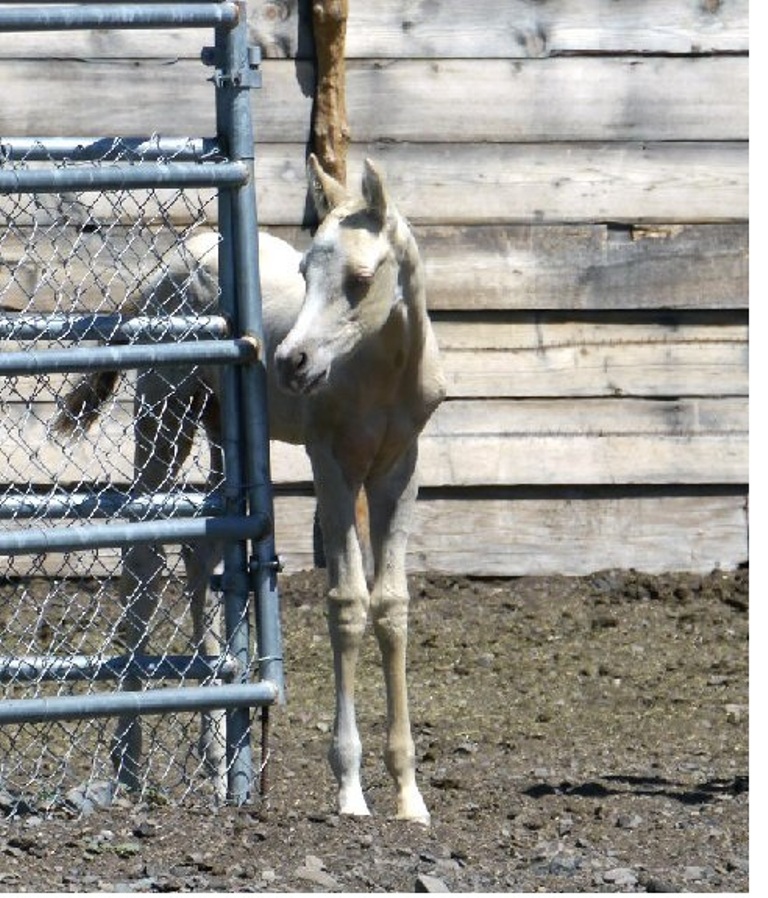
R Luna Azul, killed by a single wolf 2-13-14 Idaho documented wolf packs in 2013. Officials believe
this may represent only about 50% of Idaho wolves!Idaho documented wolf packs in 2013. Officials believe this may represent only about 50% of Idaho wolves!
Following is a tragic report of a recent colt that was killed (2-13-2014) by a single wolf near Sun Valley. As you know many Idaho ranchers are suffering similar experiences but their stories don’t get told. The owners of this colt took every precaution imaginable to mitigate this wolf attack. Ironically, in January of 2010, this couple testified in Boise at the IDFG public testimony hearing. In this 2010 recording, Mr. Swigert delivers one of the most heartfelt, moving testimonies of the challenges they were facing in Sun Valley due to wolves. Mr. Swigert also describes in this 4 year old recording the many types of infrastructure deterrents they were implementing to keep wolves away from their valuable livestock and dogs. They even own a pet coyote that they use to alarm them when wolves are near. The following is their written history with supporting photos of the extreme measures they took to protect their valuable livestock and pets from wolves.Even with all of these wolf deterrent systems in place, a single wolf was able penetrate their protective barriers and change their lives forever. A colt that’s loss cannot be measured in a dollar value to the owners. To the rest of us that didn’t raise and fall in love with this little colt we know something is wrong when we realize the colt was worth almost half of the total dollars allocated for wolf control in Idaho for 2013! This is why HB 470 must be passed! Idaho is losing millions every year to livestock and elk predation from wolves and this does not include the pain and suffering by 5th generation Idahoans like the Swigerts.
The Tragedy of loosing JR Luna Azul
On Thursday February 13, 2014, JR Luna Azul was killed by a single wolf. In the grand scheme of things the death of a seven month old colt probably does not amount to much but in our lives it was the inglorious culmination of 12 years of fighting to protect our dogs, horses, sheep, goats and ourselves from the insidious assault by an ever-present predator.
We are Kevin and Jennifer Swigert and we live at the end of Croy Creek canyon just seven miles from Hailey, Idaho. Kevin is a fifth generation Idaho native from Blaine and Custer Counties. We have raised horses for nearly thirty years around central Idaho from Stanley to Mackay and finally back to the Wood River Valley where we have been for the past 13 years. We also raise, train and vendor Bloodhounds to law enforcement, the military and search & rescue through our company Longstride Bloodhounds. We focus all our efforts and resources on our animals and have developed what many consider to be state of the art defenses against the depredation of wolves. We use stallions to protect the mares and foals, we use Akbash guard dogs and even have a ten year old pet coyote that is indispensible as an early warning that wolves are near and require vigilance.
Over the years we have had hundreds of encounters with wolves ranging from dog attacks to being charged by aggressive dominant alpha males while out training the tracking dogs. We have lost two mares to wolf activity when they panicked and injured themselves on fencing and icy winter ground. Always we considered ourselves to be well prepared and that the results of all these encounters where as good as could be expected. That has been the case until the last few weeks.
JR Luna Azul was the last stud colt from a stallion that can only be described as a once in a lifetime friend. April Fools Luna Azul was a ground breaking horse. Not only was he a superlative sire of many outstanding horses he was also the first horse to ever carry the POW/MIA Flag in a parade. After Bowe Bergdahl was captured in Afghanistan, permission was obtained through the Pentagon for the Wagon Days Parade to be the venue for the first ever display of this flag from horseback. The Army even sent a special drummer to accompany Azul through the parade route. Azul died in July of 2013 from a rattle snake bite to the chest. JR Luna Azul was born a few days later and from the first few days it was obvious he was exactly like his sire. Our intention was to raise JR as Azul’s replacement. We now have no replacement for this magnificent horse.
January of this year started out bad in our area. On January 13 we received a call from a close friend that a hunting dog had been killed by wolves just a couple of miles from our home and his advice was to be very careful. Our usual training ground is the canyon behind our ranch as the road is a dead end and receives little traffic making for a great area to work the dogs and keep them in top shape. We refrained from using the area for a week till the danger had passed, as wolves will generally move on without a good prey base. When we again started using the canyon it was obvious there was still a presence of wolves. The four juvenile females reported to us were still around but gave the dogs a pretty wide birth. Each day that the dogs were worked got more intense and on the sixth day they ambushed the dogs.
Jennifer was alone training the dogs. There was the usual group of twelve seasoned male bloodhounds along with three cadaver labs, two Irish Wolfhounds we use as sight hounds and three Border Collies. The four wolves ambushed the dogs only a few feet from Jennifer and she fired her AR-15 several times to scare them off. They managed to bite a Border Collie on the back and they ran off a three year old well trained Bloodhound male. The Border Collie was taken to the vet for emergency treatment along with a Rabies update and eventually recovered from the bites to her back. The Bloodhound was gone all night and returned at first light unscathed. We considered ourselves fortunate that nothing worse had happened but we did contact Idaho F&G and had a conservation officer look over the scene. He was surprised at the proximity to Jennifer (under 100 feet) where the wolves attacked the dogs. The behavior of these wolves was decidedly different from our experience. Hazing has always been effective in scaring them off. These wolves seemed to be attracted to the gunfire and accelerated their position over the course of a week till they ambushed Jennifer and her dogs. We have resolved to avoid the canyon till the situation is safer.
A few days after the attack on Jennifer we heard there had been a couple of wolves harvested by hunters and we began to breath a bit easier. We had requested a “shoot-on-sight” permit from the F&G to protect our animals but this was denied. Normally we have regular permits but the fact that in the Wood River Valley the permit holder information gets found out and in the interest of avoiding confrontation with pro-wolf individuals and groups we opted to rely on the 10J rules to protect our property. When off our property we would rely on hazing the wolves till we could make a retreat. We always carry weapons when out training the dogs as we have vast experience with posturing wolves.
Things seemed to be getting back to some sense of normal as we had heard the wolves were mating in Deer Creek and would probably not be venturing into Croy Creek for at least a few weeks. Then on the morning of February 13th we discovered JR Luna Azul. The field we keep the young horses in is about a mile from our home and to give them as much protection as possible we have a stallion and four very savy mares in with the young horses. We also have two Akbash guard dogs penned next to the barn where the horses can take refuge amongst a solid barrier of fences and barn walls with constantly burning lights. The deep snow we received the week before was limiting the movement of all the animals and in spite of the efforts by the stallion to protect JR a single wolf got the colt isolated against an outer fence just 100 feet from the barn and disemboweled him. Leaving a few choice mouthfuls of fur behind from the stallion the wolf left JR to bleed out with his intestines strung out across the ground.
In all the years of dealing with wolves and working hard to limit their ability to get close to the horses and dogs, we have never seen a single wolf be so bold as to attempt an attack like this. The track was not overly large, perhaps just a two year old, and from our experience this behavior is a major and very unwelcome change.
Croy Creek Canyon has been an active wolf environment for many years and the disappearance of the wintering elk and deer attest to the impact. During the winter of 2001 we lost a stallion when he had an unfortunate encounter with a wintering bull elk. We had three very large bulls spend the winter in our pasture and the hills surrounding our place were populated by perhaps two hundred elk. This winter, 2014, we have no elk or deer and have not seen any for a few years. We occasionally have one pass through but that has become far less frequent. The wolf population has increased every year and as the prey base disappears the only source of sustenance for wolves are coyotes, magpies, livestock and pets. We as responsible livestock owners have always felt it was better to create our own defenses than to rely on the efforts of other less reliable resources. The vigilance required to keep our animals safe is non-stop and all consuming. The ability to stay ahead of the hazard seems to be coming to an end. There is far less of a prey base for the wolves and they are getting more aggressive and more plentiful. It appears that we may not be horse breeders any longer.
Kevin & Jennifer Swigert
Hailey, Idaho
Happy, the 10 year old coyote, (Left). Happy’s role is to warn them of
approaching wolves. The Swigerts learned that coyotes can detect the presence
of wolves much sooner than dogs.
"Yesterday a part of me died with my little friend JR Luna Azul."
"RIP my beautiful colt!" I will hunt down the wolf that did this".....
"Rest assured, it is now living on borrowed time."
"Rise and rise again until lambs become lions!!!"
...Jennifer Swigert, Sun Valley, ID 2-13-2014
A recent tragedy in Sun Valley brings to light how serious the wolf debate has become!
Posted: Wednesday, February 19, 2014
Steve Alder, Idaho For Wildlife
"Yesterday a part of me died with my little friend JR Luna Azul."
"RIP my beautiful colt!" I will hunt down the wolf that did this".....
"Rest assured, it is now living on borrowed time."
"Rise and rise again until lambs become lions!!!"
...Jennifer Swigert, Sun Valley, ID 2-13-2014
R Luna Azul, killed by a single wolf 2-13-14 Idaho documented wolf packs in 2013. Officials believe
this may represent only about 50% of Idaho wolves!Idaho documented wolf packs in 2013. Officials believe this may represent only about 50% of Idaho wolves!
Following is a tragic report of a recent colt that was killed (2-13-2014) by a single wolf near Sun Valley. As you know many Idaho ranchers are suffering similar experiences but their stories don’t get told. The owners of this colt took every precaution imaginable to mitigate this wolf attack. Ironically, in January of 2010, this couple testified in Boise at the IDFG public testimony hearing. In this 2010 recording, Mr. Swigert delivers one of the most heartfelt, moving testimonies of the challenges they were facing in Sun Valley due to wolves. Mr. Swigert also describes in this 4 year old recording the many types of infrastructure deterrents they were implementing to keep wolves away from their valuable livestock and dogs. They even own a pet coyote that they use to alarm them when wolves are near. The following is their written history with supporting photos of the extreme measures they took to protect their valuable livestock and pets from wolves.Even with all of these wolf deterrent systems in place, a single wolf was able penetrate their protective barriers and change their lives forever. A colt that’s loss cannot be measured in a dollar value to the owners. To the rest of us that didn’t raise and fall in love with this little colt we know something is wrong when we realize the colt was worth almost half of the total dollars allocated for wolf control in Idaho for 2013! This is why HB 470 must be passed! Idaho is losing millions every year to livestock and elk predation from wolves and this does not include the pain and suffering by 5th generation Idahoans like the Swigerts.
The Tragedy of loosing JR Luna Azul
On Thursday February 13, 2014, JR Luna Azul was killed by a single wolf. In the grand scheme of things the death of a seven month old colt probably does not amount to much but in our lives it was the inglorious culmination of 12 years of fighting to protect our dogs, horses, sheep, goats and ourselves from the insidious assault by an ever-present predator.
We are Kevin and Jennifer Swigert and we live at the end of Croy Creek canyon just seven miles from Hailey, Idaho. Kevin is a fifth generation Idaho native from Blaine and Custer Counties. We have raised horses for nearly thirty years around central Idaho from Stanley to Mackay and finally back to the Wood River Valley where we have been for the past 13 years. We also raise, train and vendor Bloodhounds to law enforcement, the military and search & rescue through our company Longstride Bloodhounds. We focus all our efforts and resources on our animals and have developed what many consider to be state of the art defenses against the depredation of wolves. We use stallions to protect the mares and foals, we use Akbash guard dogs and even have a ten year old pet coyote that is indispensible as an early warning that wolves are near and require vigilance.
Over the years we have had hundreds of encounters with wolves ranging from dog attacks to being charged by aggressive dominant alpha males while out training the tracking dogs. We have lost two mares to wolf activity when they panicked and injured themselves on fencing and icy winter ground. Always we considered ourselves to be well prepared and that the results of all these encounters where as good as could be expected. That has been the case until the last few weeks.
JR Luna Azul was the last stud colt from a stallion that can only be described as a once in a lifetime friend. April Fools Luna Azul was a ground breaking horse. Not only was he a superlative sire of many outstanding horses he was also the first horse to ever carry the POW/MIA Flag in a parade. After Bowe Bergdahl was captured in Afghanistan, permission was obtained through the Pentagon for the Wagon Days Parade to be the venue for the first ever display of this flag from horseback. The Army even sent a special drummer to accompany Azul through the parade route. Azul died in July of 2013 from a rattle snake bite to the chest. JR Luna Azul was born a few days later and from the first few days it was obvious he was exactly like his sire. Our intention was to raise JR as Azul’s replacement. We now have no replacement for this magnificent horse.
January of this year started out bad in our area. On January 13 we received a call from a close friend that a hunting dog had been killed by wolves just a couple of miles from our home and his advice was to be very careful. Our usual training ground is the canyon behind our ranch as the road is a dead end and receives little traffic making for a great area to work the dogs and keep them in top shape. We refrained from using the area for a week till the danger had passed, as wolves will generally move on without a good prey base. When we again started using the canyon it was obvious there was still a presence of wolves. The four juvenile females reported to us were still around but gave the dogs a pretty wide birth. Each day that the dogs were worked got more intense and on the sixth day they ambushed the dogs.
Jennifer was alone training the dogs. There was the usual group of twelve seasoned male bloodhounds along with three cadaver labs, two Irish Wolfhounds we use as sight hounds and three Border Collies. The four wolves ambushed the dogs only a few feet from Jennifer and she fired her AR-15 several times to scare them off. They managed to bite a Border Collie on the back and they ran off a three year old well trained Bloodhound male. The Border Collie was taken to the vet for emergency treatment along with a Rabies update and eventually recovered from the bites to her back. The Bloodhound was gone all night and returned at first light unscathed. We considered ourselves fortunate that nothing worse had happened but we did contact Idaho F&G and had a conservation officer look over the scene. He was surprised at the proximity to Jennifer (under 100 feet) where the wolves attacked the dogs. The behavior of these wolves was decidedly different from our experience. Hazing has always been effective in scaring them off. These wolves seemed to be attracted to the gunfire and accelerated their position over the course of a week till they ambushed Jennifer and her dogs. We have resolved to avoid the canyon till the situation is safer.
A few days after the attack on Jennifer we heard there had been a couple of wolves harvested by hunters and we began to breath a bit easier. We had requested a “shoot-on-sight” permit from the F&G to protect our animals but this was denied. Normally we have regular permits but the fact that in the Wood River Valley the permit holder information gets found out and in the interest of avoiding confrontation with pro-wolf individuals and groups we opted to rely on the 10J rules to protect our property. When off our property we would rely on hazing the wolves till we could make a retreat. We always carry weapons when out training the dogs as we have vast experience with posturing wolves.
Things seemed to be getting back to some sense of normal as we had heard the wolves were mating in Deer Creek and would probably not be venturing into Croy Creek for at least a few weeks. Then on the morning of February 13th we discovered JR Luna Azul. The field we keep the young horses in is about a mile from our home and to give them as much protection as possible we have a stallion and four very savy mares in with the young horses. We also have two Akbash guard dogs penned next to the barn where the horses can take refuge amongst a solid barrier of fences and barn walls with constantly burning lights. The deep snow we received the week before was limiting the movement of all the animals and in spite of the efforts by the stallion to protect JR a single wolf got the colt isolated against an outer fence just 100 feet from the barn and disemboweled him. Leaving a few choice mouthfuls of fur behind from the stallion the wolf left JR to bleed out with his intestines strung out across the ground.
In all the years of dealing with wolves and working hard to limit their ability to get close to the horses and dogs, we have never seen a single wolf be so bold as to attempt an attack like this. The track was not overly large, perhaps just a two year old, and from our experience this behavior is a major and very unwelcome change.
Croy Creek Canyon has been an active wolf environment for many years and the disappearance of the wintering elk and deer attest to the impact. During the winter of 2001 we lost a stallion when he had an unfortunate encounter with a wintering bull elk. We had three very large bulls spend the winter in our pasture and the hills surrounding our place were populated by perhaps two hundred elk. This winter, 2014, we have no elk or deer and have not seen any for a few years. We occasionally have one pass through but that has become far less frequent. The wolf population has increased every year and as the prey base disappears the only source of sustenance for wolves are coyotes, magpies, livestock and pets. We as responsible livestock owners have always felt it was better to create our own defenses than to rely on the efforts of other less reliable resources. The vigilance required to keep our animals safe is non-stop and all consuming. The ability to stay ahead of the hazard seems to be coming to an end. There is far less of a prey base for the wolves and they are getting more aggressive and more plentiful. It appears that we may not be horse breeders any longer.
Kevin & Jennifer Swigert
Hailey, Idaho
Happy, the 10 year old coyote, (Left). Happy’s role is to warn them of
approaching wolves. The Swigerts learned that coyotes can detect the presence
of wolves much sooner than dogs.
Last edited by summit daWg; 02-24-2014 at 12:13 PM.
02-24-2014 | 12:17 PM
#3
Nontypical Buck
Joined: Jul 2003
Posts: 1,386
Likes: 0
From: Arlington Wa. USA
http://hunting-washington.com/smf/in...oard,76.0.html
Another site for wolf discussion. I usually spend my hunting forum time there since it is more local to my areas
Another site for wolf discussion. I usually spend my hunting forum time there since it is more local to my areas
