


3rd plane sight adjustment
 01-24-2008 | 08:03 AM
#11

Giant Nontypical
Joined: Feb 2003
Posts: 6,455
Likes: 0
From: Burleson TX USA
 RE: 3rd plane sight adjustment
Jeff
Once you have the 2nd and 3rd axis worked out learn about the benifits of the 4th axis
Check out this web site it has info on the axis's and you can buy a 3rd axis leveller just click on the product tab.
http://www.archerytech.com/
Once you have the 2nd and 3rd axis worked out learn about the benifits of the 4th axis
Check out this web site it has info on the axis's and you can buy a 3rd axis leveller just click on the product tab.
http://www.archerytech.com/
 01-24-2008 | 08:17 AM
#12
Nontypical Buck
Joined: Feb 2003
Posts: 2,357
Likes: 0
RE: 3rd plane sight adjustment
Checking the bubble should become part of the shot routine, it can show problems even when you have perfectly level and comfortable footing, hills or anything not level near or behind the target can play tricks with your brain and make you cant the bow. If you get it into the shot routine to check/adjust to the bubble your life becomes better.
There are some easy, though not perfect ways, to check the 3rd axis. I've used a doorway to do it. Rest the bow against the doorway (first make sure the doorway is plumb!). Make sure the sight bubble is level (2nd axis I believe). Now assuming your doorway/wall will allow this, rotate the bow keeping it up against whatever you're using, if the bow stays square to the floor, the bubble should stay centered.
Not all sights have a third axis adjustment, but they are nice. Even if you can't do 3rd axis you may find you need to adjust it to be on on the second axis!
There are some easy, though not perfect ways, to check the 3rd axis. I've used a doorway to do it. Rest the bow against the doorway (first make sure the doorway is plumb!). Make sure the sight bubble is level (2nd axis I believe). Now assuming your doorway/wall will allow this, rotate the bow keeping it up against whatever you're using, if the bow stays square to the floor, the bubble should stay centered.
Not all sights have a third axis adjustment, but they are nice. Even if you can't do 3rd axis you may find you need to adjust it to be on on the second axis!
01-24-2008 | 10:21 AM
#13

Joined: Jan 2004
Posts: 3,703
Likes: 0
From: Eureka, MO
RE: 3rd plane sight adjustment
RJ: Does that way of setting the 3rd axis (not at full draw) take into account that when the bow is drawn, the riser rotates as suggested in the spot hogg article Matt posted? It would make sense that when you draw back, as energy is stored into the cables, it would make a right handed bow rotate right, which it does as I can see when I draw my bow back with a long stab on it.
Edit: I see that you go out and shoot to test and it's usually right on.
Edit: I see that you go out and shoot to test and it's usually right on.
01-24-2008 | 03:53 PM
#14

Giant Nontypical
Joined: Feb 2003
Posts: 6,634
Likes: 0
From: HENDERSON KY USA
RE: 3rd plane sight adjustment
Again I say it,if the 3rd axis is not set to the path of the arrow,it is not set right.Ausie gave a good link that shows how to do it very easily.The 4rth axis adjustment is just an easy way to make sure the 3rd gets set to the arrow.The 4rth,in and of itself really isn't a big deal,unless you slide the bar in and out to gain yardage on a slide bar.
Here is a thread I made on the subject some time back.There a few good links in the thread,I believe all that were listed here are in it.
http://www.huntingnet.com/forum/tm.aspx?m=2282390
AND yes.when I was competing,I looked at the level on every shot.I even give it a glance when hunting,I just don't feel it is quite as critical on a hunting setup.UNLESS,you hunt on really hilly terrain where an uphill 40 yard shot is something you might run in to.
Here is a thread I made on the subject some time back.There a few good links in the thread,I believe all that were listed here are in it.
http://www.huntingnet.com/forum/tm.aspx?m=2282390
AND yes.when I was competing,I looked at the level on every shot.I even give it a glance when hunting,I just don't feel it is quite as critical on a hunting setup.UNLESS,you hunt on really hilly terrain where an uphill 40 yard shot is something you might run in to.
01-24-2008 | 04:02 PM
#15
Giant Nontypical
Joined: Feb 2003
Posts: 6,634
Likes: 0
From: HENDERSON KY USA
RE: 3rd plane sight adjustment
ORIGINAL: MO_Bowhnter
RJ: Does that way of setting the 3rd axis (not at full draw) take into account that when the bow is drawn, the riser rotates as suggested in the spot hogg article Matt posted? It would make sense that when you draw back, as energy is stored into the cables, it would make a right handed bow rotate right, which it does as I can see when I draw my bow back with a long stab on it.
Edit: I see that you go out and shoot to test and it's usually right on.
RJ: Does that way of setting the 3rd axis (not at full draw) take into account that when the bow is drawn, the riser rotates as suggested in the spot hogg article Matt posted? It would make sense that when you draw back, as energy is stored into the cables, it would make a right handed bow rotate right, which it does as I can see when I draw my bow back with a long stab on it.
Edit: I see that you go out and shoot to test and it's usually right on.
Another good reason to set the 3rdto the arrow path with the 4rth axis tool.I never used one,I would just shim the sight bar mount with an old credit card or whatever was the right thickness.

I actually learned that trick from my friend that tunes bows for world competition shooters(a few worl records on his bows)on his hooter shooter.I got my bow back after he had installed the new strings and gave me a free tuning on the machine and I noticed the shim(before the 4rth axis tool had even been invented)and that was because my riser was not square to centershot which meant my sight bar could not be used to set my 3rd axis unless it was shimmed so it would run parallel with the arrow,then I could easily use the sight bar and even check if my 3rd was still on while in the field by just putting a level on the sight bar and tilting the bow downhill.
 01-24-2008 | 05:29 PM
#17
Giant Nontypical
Joined: Feb 2003
Posts: 6,634
Likes: 0
From: HENDERSON KY USA
RE: 3rd plane sight adjustment
ORIGINAL: gzg38b
This stuff gives me a headache!
I've got a Masters in Engineering from Purdue but I just can't grasp the concept of 3rd axis leveling.....
This stuff gives me a headache!
I've got a Masters in Engineering from Purdue but I just can't grasp the concept of 3rd axis leveling.....
Think of the arrows path(centershot of the bow)as another plane that the bubble has to be SQUARE with.If that plane isn't maintained on a square plane with the bubble,you will hit left or right and lowof the intended spot.
That is all a level does,reads square,when it gets rotated downhill,it must remain square with the intended plane(in this case,arrows path)to read correctly.
Give it some time to sink in,not really all that difficult.[8D]
01-24-2008 | 05:57 PM
#18

Joined: Mar 2004
Posts: 13,082
Likes: 0
From:
RE: 3rd plane sight adjustment
Instead of the bubble "rolling over" on a level plane, it's twisted 45 degrees, meaning one end of the level is higher than the other, making it appear the bubble isn't level.
Imagine a 3 deminsional rectangle. Perfectly level to the ground. Let's call the end on the ground side 1, then the next side 2, and so on.....So you're on side 1, and you roll it halfway between side 1 and 2. If that rectangle doesn't remain perfectly level, the bubble will lift to the high side. Thus creating the illusion that the bow isn't square. So you torque the bow to move the bubble back to level, and what you've actually done is moved it OUT of level, thus shooting right or left.
Man, I know exactly what I'm trying to say, but I'm not saying it very well........Wish I could draw a picture...
Imagine a 3 deminsional rectangle. Perfectly level to the ground. Let's call the end on the ground side 1, then the next side 2, and so on.....So you're on side 1, and you roll it halfway between side 1 and 2. If that rectangle doesn't remain perfectly level, the bubble will lift to the high side. Thus creating the illusion that the bow isn't square. So you torque the bow to move the bubble back to level, and what you've actually done is moved it OUT of level, thus shooting right or left.
Man, I know exactly what I'm trying to say, but I'm not saying it very well........Wish I could draw a picture...
01-24-2008 | 06:10 PM
#19
Giant Nontypical
Joined: Feb 2003
Posts: 6,634
Likes: 0
From: HENDERSON KY USA
RE: 3rd plane sight adjustment
ORIGINAL: mobow
Instead of the bubble "rolling over" on a level plane, it's twisted 45 degrees, meaning one end of the level is higher than the other, making it appear the bubble isn't level.
Imagine a 3 deminsional rectangle. Perfectly level to the ground. Let's call the end on the ground side 1, then the next side 2, and so on.....So you're on side 1, and you roll it halfway between side 1 and 2. If that rectangle doesn't remain perfectly level, the bubble will lift to the high side. Thus creating the illusion that the bow isn't square. So you torque the bow to move the bubble back to level, and what you've actually done is moved it OUT of level, thus shooting right or left.
Man, I know exactly what I'm trying to say, but I'm not saying it very well........Wish I could draw a picture...
Instead of the bubble "rolling over" on a level plane, it's twisted 45 degrees, meaning one end of the level is higher than the other, making it appear the bubble isn't level.
Imagine a 3 deminsional rectangle. Perfectly level to the ground. Let's call the end on the ground side 1, then the next side 2, and so on.....So you're on side 1, and you roll it halfway between side 1 and 2. If that rectangle doesn't remain perfectly level, the bubble will lift to the high side. Thus creating the illusion that the bow isn't square. So you torque the bow to move the bubble back to level, and what you've actually done is moved it OUT of level, thus shooting right or left.
Man, I know exactly what I'm trying to say, but I'm not saying it very well........Wish I could draw a picture...
I actually illustrate just this on my thread with pictures. My homemade level is actually square on all sides to the bubble,just like you are trying to explain.
The protractor level is not square to the bubble on all sides.
01-24-2008 | 06:14 PM
#20
Giant Nontypical
Joined: Feb 2003
Posts: 6,634
Likes: 0
From: HENDERSON KY USA
RE: 3rd plane sight adjustment
All of these pictures are taken on a flat surface with the level staying in contact with it the whole time.
Notice how the protractor bubble moves as I rotate it over.
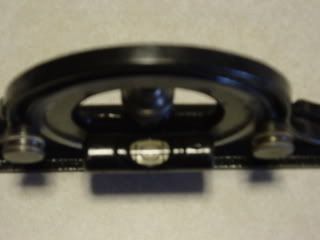
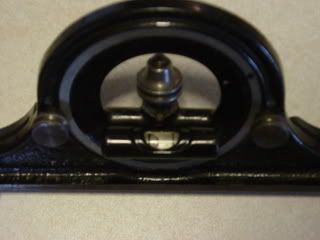
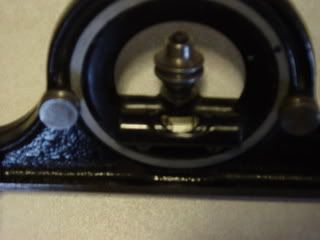
Notice how the bubble stays cenetered as I rotate the square level over.
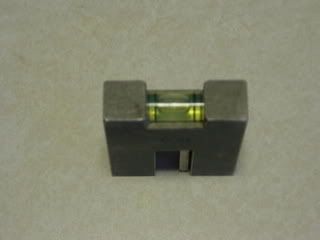
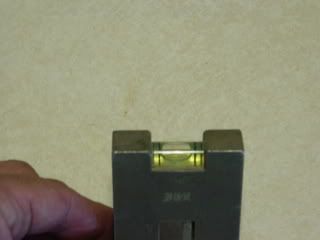
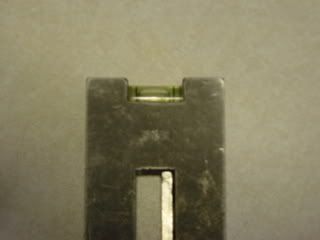
Notice how the protractor bubble moves as I rotate it over.
Notice how the bubble stays cenetered as I rotate the square level over.