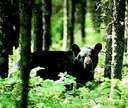
Is this a Black Coyote
 01-26-2006 | 06:08 PM
#71
Thread Starter
Joined: Oct 2003
Posts: 255
Likes: 0
 RE: Is this a Black Coyote
Agreeded,,,,,,Coyote .
I'v gotten another 10 pic's and it has abit of mange on the back side.
I believe he followed me last night.,,,,I left my stand and passed a camera at 6 pm(pic taken).This morning I head over to check the camera ,theres me at 6pm and there he is at 6:05 pm.
What I really believe he is following is the raccoone cover scent on my boots
I'v gotten another 10 pic's and it has abit of mange on the back side.
I believe he followed me last night.,,,,I left my stand and passed a camera at 6 pm(pic taken).This morning I head over to check the camera ,theres me at 6pm and there he is at 6:05 pm.
What I really believe he is following is the raccoone cover scent on my boots
 01-26-2006 | 08:03 PM
#72

Joined: Feb 2003
Posts: 1,207
Likes: 0
From: Louisville Kentucky USA
RE: Is this a Black Coyote
ORIGINAL: Bill Yox
Having seen as many as I have, this isnt even a vote, to me its obvious...its simply an eastern coyote in the black phase. We see plenty of them, even though this color seems to be less frequent then any other color phase. Many other black phase animals have the familiar white chevron on the chest too. Black squirrels, bears, black muskrats and most mink all have the white, even if its just a spot. As for dog crosses, I seldom see them here, but then again, others have covered this well already. The real problem stems from folks using the slang "coydog" or "brushwolf" in error. A true cross, like Charlie said, is when an amorous male dog breeds with a female coyote. This can happen when coyotes are new to an area and theres feral dogs present, most of the time. The resulting offspring arent sterile, but will cycle at the wrong time of the season for pups to survive or other male coyotes to breed with the resulting female cross breds. They also have patches ofcolor from the dog, or long haired "socks" from other breeds, or floppy ears or dark eyes, for example.
The coyote pictured is so typical of an eastern coyote...heavy build, wrists and heels that are sturdier than western coyotes, and a heavier head which sometimes makes the muzzle appear shorter. Eastern coyotes usually have a muzzle length of about 4 1/4 inches from the eye to the nose tip, and run about 42 inches nose to base of tail, on the carcass. (remember, Im a taxidermist, Ive mounted too many of these!)
As we have mentioned in so many other posts just like this one, the color phases of grey, brown, blonde, a true red and various black colors is common. The black coyote actually has dark black tips on dark brown or smokie grey hairs, with charcoal or grey underfur, with black and/or brown highlights. The hackles, legs, ears, face and tail are usually the darkest. The eyes are usually hazel in this color phase. You can tell immature wolves or coyotes right off, as they usually still have a blue-grey eye.
I dont wanna come off sounding like a know-it-all, or offend anyone else based on their opinions posted here. I just know this animal all too well. Heck, I could talk about windwalkers blonde squirrel too, Ive seen enough of those, and could tell you where a live one is today!
By the way, as an aside...I often see where guys say to sell animals to taxidermists (as we are too dumb to know what the fur prices are, lol) because many taxidermists like to collect odd color phases. Well, black coyotes are a popular one, so if you get one you arent interested in, the fur value for the market is zero. But guys love to mount them, and they will bring a better price then about anything else you might catch right now. Its best to freeze them whole or sell as is, no skinning. Some guys dorsal cut them, others still do them trapper style, cased, with all parts intact. I know theyll easily go over $100 this way. Hope this helps a few of you out!
Having seen as many as I have, this isnt even a vote, to me its obvious...its simply an eastern coyote in the black phase. We see plenty of them, even though this color seems to be less frequent then any other color phase. Many other black phase animals have the familiar white chevron on the chest too. Black squirrels, bears, black muskrats and most mink all have the white, even if its just a spot. As for dog crosses, I seldom see them here, but then again, others have covered this well already. The real problem stems from folks using the slang "coydog" or "brushwolf" in error. A true cross, like Charlie said, is when an amorous male dog breeds with a female coyote. This can happen when coyotes are new to an area and theres feral dogs present, most of the time. The resulting offspring arent sterile, but will cycle at the wrong time of the season for pups to survive or other male coyotes to breed with the resulting female cross breds. They also have patches ofcolor from the dog, or long haired "socks" from other breeds, or floppy ears or dark eyes, for example.
The coyote pictured is so typical of an eastern coyote...heavy build, wrists and heels that are sturdier than western coyotes, and a heavier head which sometimes makes the muzzle appear shorter. Eastern coyotes usually have a muzzle length of about 4 1/4 inches from the eye to the nose tip, and run about 42 inches nose to base of tail, on the carcass. (remember, Im a taxidermist, Ive mounted too many of these!)
As we have mentioned in so many other posts just like this one, the color phases of grey, brown, blonde, a true red and various black colors is common. The black coyote actually has dark black tips on dark brown or smokie grey hairs, with charcoal or grey underfur, with black and/or brown highlights. The hackles, legs, ears, face and tail are usually the darkest. The eyes are usually hazel in this color phase. You can tell immature wolves or coyotes right off, as they usually still have a blue-grey eye.
I dont wanna come off sounding like a know-it-all, or offend anyone else based on their opinions posted here. I just know this animal all too well. Heck, I could talk about windwalkers blonde squirrel too, Ive seen enough of those, and could tell you where a live one is today!
By the way, as an aside...I often see where guys say to sell animals to taxidermists (as we are too dumb to know what the fur prices are, lol) because many taxidermists like to collect odd color phases. Well, black coyotes are a popular one, so if you get one you arent interested in, the fur value for the market is zero. But guys love to mount them, and they will bring a better price then about anything else you might catch right now. Its best to freeze them whole or sell as is, no skinning. Some guys dorsal cut them, others still do them trapper style, cased, with all parts intact. I know theyll easily go over $100 this way. Hope this helps a few of you out!
 01-27-2006 | 11:04 AM
#75
Joined: Dec 2004
Posts: 613
Likes: 0
From: Brockport, NY
RE: Is this a Black Coyote
Duse, thank you for the opportunity to clarify! I sure couldnt speak for every situation, or every taxidermist, but Ill tell you what I know...
First off, my experience with actually handling mangy canines is limited, because whether I trap a mangy canine or have one come to my studio, I flat out refuse to handle them. I have been told by veterinarians that mange, carried by sarcoptic mites, can spread to humans, and by other vets that it cannot. I KNOW it wont spread to me this way, as I always refuse. Its a precaution I feel I need to take.
As for your coyote, I have seen that when mange shows in one area, like the sides of the animal, youll notice that its balanced, that is to say, if one flank is affected, so is the other side. Usually, when you see it that obvious, theres also some other spots, more subtle, like behind the ears, along the tail, and down the inside of the legs. If its scabby, flakey skin thats discolored, usually its also open sores and weaping. That leads to missing or damaged fur from the animal "attending" to it.
So, to wrap up this long winded post of mine, Im sure there are those out there who may try to mount the coyote anyway. Perhaps the damage is not very noticeable. Sometimes what folks call mange is not mange at all. Coyotes and fox are known for getting hair "singe" or broken hair tips along the hind and sides...from it breaking off in snow or freezing. Females that start to investigate dens at this time of the year start to get "rubbed". So, if the skin itself isnt crusted or broken, it may just be hair damage. Then YES, the taxidermist could either try repairing, or suggest a form style, pose, that keeps it from being the main focus point.
One last point. If youre the guy who started this post, and the first pictures of the brown/black coyote is the one in question, I didnt think it had mange. Sometimes the black ones arent black everywhere, and thus, appear rubbed only. Feel free to contact me if you need further direction!
First off, my experience with actually handling mangy canines is limited, because whether I trap a mangy canine or have one come to my studio, I flat out refuse to handle them. I have been told by veterinarians that mange, carried by sarcoptic mites, can spread to humans, and by other vets that it cannot. I KNOW it wont spread to me this way, as I always refuse. Its a precaution I feel I need to take.
As for your coyote, I have seen that when mange shows in one area, like the sides of the animal, youll notice that its balanced, that is to say, if one flank is affected, so is the other side. Usually, when you see it that obvious, theres also some other spots, more subtle, like behind the ears, along the tail, and down the inside of the legs. If its scabby, flakey skin thats discolored, usually its also open sores and weaping. That leads to missing or damaged fur from the animal "attending" to it.
So, to wrap up this long winded post of mine, Im sure there are those out there who may try to mount the coyote anyway. Perhaps the damage is not very noticeable. Sometimes what folks call mange is not mange at all. Coyotes and fox are known for getting hair "singe" or broken hair tips along the hind and sides...from it breaking off in snow or freezing. Females that start to investigate dens at this time of the year start to get "rubbed". So, if the skin itself isnt crusted or broken, it may just be hair damage. Then YES, the taxidermist could either try repairing, or suggest a form style, pose, that keeps it from being the main focus point.
One last point. If youre the guy who started this post, and the first pictures of the brown/black coyote is the one in question, I didnt think it had mange. Sometimes the black ones arent black everywhere, and thus, appear rubbed only. Feel free to contact me if you need further direction!
01-27-2006 | 01:42 PM
#77

Giant Nontypical
Joined: Feb 2004
Posts: 7,208
Likes: 0
From: Pittsburgh, PA
RE: Is this a Black Coyote
Regarding the mange thing, I am not a vet, but was told by mine that there are 2 types of mange, one that can be spread, one that can't. My dog had the non-spreadable form that emerges typically in puppies or at a time when the animals immune system is low. She didn't catch it from any where, as it emerges from a skin mite already present, just unable to be controlled by the dogs system. It's treatable,and costly and a pain.
The other mange is typically the one seen among wild critters, and can be fatal to them, and spreadable. I can't comment on the validity ofwhether it can spreadto humans or not.
The other mange is typically the one seen among wild critters, and can be fatal to them, and spreadable. I can't comment on the validity ofwhether it can spreadto humans or not.