


Olive oil and water patch lube range report
 04-23-2010 | 02:24 AM
#1

Thread Starter
Nontypical Buck
Joined: Aug 2005
Posts: 3,814
Likes: 0
From: Phoenix, AZ
 Olive oil and water patch lube range report
Hello all. A couple of days ago, I made up a patch lube of equal parts olive oil and water. After soaking the patches, I let them dry for 6 hours and put the patches in a film canister for storage.
I wanted to share my results in case anyone has ever considered this combination.
Bottom line: don't do it.
With a fan blowing on them, I gave the patches 6 hours to dry. Still the olive oil must have retained some of the water. In the span of 5 shots, 2 times I had to remove the lock and touch hole liner to put in some 4F to get the main charge to go off.
I was shooting a Traditions "Shenandoah" flintlock in .50 cal. Powder was Goex 2 and 4F. The only reason I can attribute to the powder not going off was moisture from the patches getting the powder wet. When I switched to store bough "pre-lubed" patches, the rifle consistently shot without any problems.
So I cannot recommend a patch lube of olive oil and water.
Semisane mentioned that he uses just olive oil without any problems, but he also dries the patches with paper towel. Maybe I will give that a try, but olive oil is kind of expensive.
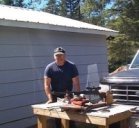
On a brighter note, I did get to try out a new shooting accessory.I put together a "rod stand." It is a simple stand made from pvc tubing. It keeps your rods easily accessible when shooting and prevents them from falling on the ground. It works very well, but I do need to stuff a rag or towel down the vertical tube to protect rod tips and the pvc from getting banged up when you drop a heavy rod in there. Below is a picture of it from my session earlier today (well yesterday actually):

I wanted to share my results in case anyone has ever considered this combination.
Bottom line: don't do it.
With a fan blowing on them, I gave the patches 6 hours to dry. Still the olive oil must have retained some of the water. In the span of 5 shots, 2 times I had to remove the lock and touch hole liner to put in some 4F to get the main charge to go off.
I was shooting a Traditions "Shenandoah" flintlock in .50 cal. Powder was Goex 2 and 4F. The only reason I can attribute to the powder not going off was moisture from the patches getting the powder wet. When I switched to store bough "pre-lubed" patches, the rifle consistently shot without any problems.
So I cannot recommend a patch lube of olive oil and water.
Semisane mentioned that he uses just olive oil without any problems, but he also dries the patches with paper towel. Maybe I will give that a try, but olive oil is kind of expensive.
On a brighter note, I did get to try out a new shooting accessory.I put together a "rod stand." It is a simple stand made from pvc tubing. It keeps your rods easily accessible when shooting and prevents them from falling on the ground. It works very well, but I do need to stuff a rag or towel down the vertical tube to protect rod tips and the pvc from getting banged up when you drop a heavy rod in there. Below is a picture of it from my session earlier today (well yesterday actually):
 04-23-2010 | 05:35 AM
#2
Dominant Buck
Joined: Feb 2003
Posts: 21,193
Likes: 0
From: Wisconsin
We made them same things for holding arrows. They work pretty slick on the range. We just stuffed some foam rubbed in the end as we left ours so it could come apart in the tube and the stand for easier transport.
04-23-2010 | 09:23 AM
#5
Thread Starter
Nontypical Buck
Joined: Aug 2005
Posts: 3,814
Likes: 0
From: Phoenix, AZ
Found this on castboolits, is this what you mean:
Stumpy's Moose Snot
A premium multi-shot between wiping (10+) patch lube stable over a wide temperature range.
SPECIFICALLY designed for use of patched round balls in a loading block
Beeswax 2 oz.
Castor Oil 8 oz.
Murphy's Oil Soap 1 oz.
Heat beeswax in a soup can set a pot of water. ( A double-boiler. I keep my beeswax in a one pound coffee can and measure out what I need by melting it and pouring it into measuring cups). Add just enough water so the inner can does not begin to float (should be just short of the lube level in the can). Heat the water to a low boil. In a separate can, add the castor oil and Murphy's oil soap (cold). Once the beeswax is melted, swap the castor oil can in the pot of water for the beeswax. Add the beeswax to the oils. It will clump up. Stir with an ice tea spoon as the mixture heats up. When it fully melts there will be a scum that floats to the top and just won't mix in. Be patient. DO NOT COOK THE MIXTURE. Once the solids are dissolved there is no need to heat further. Skim the scum off. Remove the mix from the heat and wipe the water off the outside (so it won't drip into the container when you pour it out). FINAL TOP SECRET STEP: Add a teaspoon of Murphy's Oil Soap and stir vigorously. This last step makes the lube frothy and smooth - really adds to the appearance; though it doesn't seem to matter to the function of the lube. Clamp the can in the jaws of a vice-grip pliers and pour into the waiting tins. Allow to cool a half hour.
Note: it if is a hinged tin - line the edge that has the hinges with a strip of aluminum foil so it doesn't ooze out before it cools. "
A premium multi-shot between wiping (10+) patch lube stable over a wide temperature range.
SPECIFICALLY designed for use of patched round balls in a loading block
Beeswax 2 oz.
Castor Oil 8 oz.
Murphy's Oil Soap 1 oz.
Heat beeswax in a soup can set a pot of water. ( A double-boiler. I keep my beeswax in a one pound coffee can and measure out what I need by melting it and pouring it into measuring cups). Add just enough water so the inner can does not begin to float (should be just short of the lube level in the can). Heat the water to a low boil. In a separate can, add the castor oil and Murphy's oil soap (cold). Once the beeswax is melted, swap the castor oil can in the pot of water for the beeswax. Add the beeswax to the oils. It will clump up. Stir with an ice tea spoon as the mixture heats up. When it fully melts there will be a scum that floats to the top and just won't mix in. Be patient. DO NOT COOK THE MIXTURE. Once the solids are dissolved there is no need to heat further. Skim the scum off. Remove the mix from the heat and wipe the water off the outside (so it won't drip into the container when you pour it out). FINAL TOP SECRET STEP: Add a teaspoon of Murphy's Oil Soap and stir vigorously. This last step makes the lube frothy and smooth - really adds to the appearance; though it doesn't seem to matter to the function of the lube. Clamp the can in the jaws of a vice-grip pliers and pour into the waiting tins. Allow to cool a half hour.
Note: it if is a hinged tin - line the edge that has the hinges with a strip of aluminum foil so it doesn't ooze out before it cools. "
04-23-2010 | 10:04 AM
#6
Giant Nontypical
Joined: Nov 2004
Posts: 5,425
Likes: 0
Yep...This is a pretty good traditional forum, when these guys aren't bickering over the small stuff...
http://www.muzzleloadingforum.com/fu...hp?tid/203261/
I've been using this about 3 years now...I used SnoSeal for about 25 years, but it tends to get runny in the summer...By making your own you can tailor the mix to local temperatures...
http://www.muzzleloadingforum.com/fu...hp?tid/203261/
I've been using this about 3 years now...I used SnoSeal for about 25 years, but it tends to get runny in the summer...By making your own you can tailor the mix to local temperatures...
04-23-2010 | 08:00 PM
#7
Thread Starter
Nontypical Buck
Joined: Aug 2005
Posts: 3,814
Likes: 0
From: Phoenix, AZ
By making your own you can tailor the mix to local temperatures...
(That kind of reminds me of switching automotive oil between 40 and 30 weight for the summer and winter respectively).
04-24-2010 | 07:41 AM
#8
Giant Nontypical
Joined: Nov 2004
Posts: 5,425
Likes: 0
To make it thinner for cold weather just increase the amount of castor oil, add bees wax for hot weather...
Some use olive oil in place of castor oil and evidently it works fine...The guy that developed the lube also races the small kit airplanes and those guys put castor oil into the gas for lubrication of the engine...He noticed when cleaning his plane that the smoot from the exhaust was still oily...He figured that if the castor oil would withstand the heat of combustion from the engine then it would work in a muzzleloader...You can get castor oil fairly cheep at a health food/supliment store, get the grade you rub on your skin, not for consumption...
Guys have been experimenting with different patch lubes since greased patches have been used...Some still use deer tallow and bear oil, it's just how a guy wants to go about it...
Some use olive oil in place of castor oil and evidently it works fine...The guy that developed the lube also races the small kit airplanes and those guys put castor oil into the gas for lubrication of the engine...He noticed when cleaning his plane that the smoot from the exhaust was still oily...He figured that if the castor oil would withstand the heat of combustion from the engine then it would work in a muzzleloader...You can get castor oil fairly cheep at a health food/supliment store, get the grade you rub on your skin, not for consumption...
Guys have been experimenting with different patch lubes since greased patches have been used...Some still use deer tallow and bear oil, it's just how a guy wants to go about it...
04-27-2010 | 04:12 AM
#10
Fork Horn
Joined: Feb 2009
Posts: 261
Likes: 0
From: Georgia
Hi Robert, I read your report with great intrest. I also use a 50/50 mix of olive oil and water when at the range. I put my mixture in a TC # 13 bore cleaner plastic squirt bottle and use it wet when shooting at the range. I have never had any kind of problem. I always shake the bottle before each use because the oil and water will seperate. When shooting at a match I can shoot an entire relay without swabing the bore between shots. Now, once loaded it only stays loaded for about a minute before I shoot.
In your situation, you are letting the patch material dry several hours before using it. It is just hard for me to imagine your powder becoming fowled all the way down to your breech when you are probably talking about a column of powder about 2.5" in height.
Could there be any other variables in your powder , the humidity or anything else you can think of that might have an effect on your rifle?
When I load my rifle for hunting I do not use this mixture because my rifle may stay loaded for a couple of weeks at a time. When loading for the hunt I use pure bear lard for patch lube.
In your situation, you are letting the patch material dry several hours before using it. It is just hard for me to imagine your powder becoming fowled all the way down to your breech when you are probably talking about a column of powder about 2.5" in height.
Could there be any other variables in your powder , the humidity or anything else you can think of that might have an effect on your rifle?
When I load my rifle for hunting I do not use this mixture because my rifle may stay loaded for a couple of weeks at a time. When loading for the hunt I use pure bear lard for patch lube.