
|
Thoughts on carbon in the breach plug
Over the years since I have used 209 primers and 777 and Blackhorn I have had carbon accumulate between the seat of the 209 and the touch hole in the " flame channel" and I have noticed many other comments on this.
Since it is necessary to keep that area reasonably clean for good ignition I though I would mention the thing that has relieved the problem for me. After I started modifying my breach plugs and putting vent liners in them Sabot loader mentioned that he thought that more space or volume in the breach plug would allow cleaner combustion so when I modified the next BP I ran the #21 drill that I use to make the hole for tapping all the way through. This certainly made the necessary difference, now I do not have to drill the carbon out every 12 or 14 shots I still get a small amount of accumulation but have not had to clean it out at the range. This is on a Triumph and a Endeavor Encore also on my Omega. One other comment I position the touch hole in the vent liner about where the original was, this makes a small pocket in the end of the breach plug while leaving the maximum volume for the burn of the 209. Weather the theory and deductions are correct or not is a matter of opinion but the fact is no ignition problem through a couple cases of BH and the carbon problem resolved speaks for it self in facts. |
lemoyne
I would add some additional thoughts that I just posted on another forum... Question was - what might be the advantages to the BP modification? IMO There are two real advantages... 1, the size of the flash channel is inceased to help with a more efficient burning of the primer. More heat and pressre gets to the powder quicker. It also increases the volume of the chamber - reducing the amount of blow back pressure on the nose of the primer. The increase in size of the channel allowing the primer to burn more efficiently also significantly reduces the caebon build up in the channel. 2. the addition of the vent liner increases the size of the flash hole allowing a better ignition of BH-209. By placing the Ventliner out as far as possible on the eng of the plug, it adds ro the volume that the pf blow back the flash channel can hold again decreasing the amount of pressure on the nose of the primer and reducing blow back mess in the breech. BH or any powder does not need to be right on the end of the primer if the breech plug works effeciently. Another reason i was shooting in the 8* degree weather - to test that theory... Quote:I had no mis-fires or no-fires at all during both of these sessions. Is fact that I’m having no ignition problems relating to BH209 because I’m shooting a .45 cal. instead of a .50 cal? I really do not think that the caliber, well at least 45 to 50, would play a major role in your success. Quote:I have not had a mis-fire or no-fire and I do not clean the flash channel until the end of the day. My range sessions usually last from 15 to 33 or more shots. I think there is more than one varible in the equation that makes some guns work very well with BH and others not. I would also suggest the biggest reason for some of the problems is the current breech plug designs. In your case if your Apex plug is working well shot after shot and over many shots - I might suggest it could be the type of primer you might be using, the weight of the projectile that you are shooting, even the fit of the sabot. One other thing I am finding is that climatic conditions can also effect the operation. Temp and humidity might even be a couple of the key items. Quote:Altering the BP to make a smaller powder pocket in front of the flash hole seems to be the latest solution. Not necessarily, the conventenal wisdom says to get the powder as close to the nose of the primer as you can, sorta like make it as close to mimicking a shell as you can. In my little world I some what disagree with this as it increases the blow back pressure on the nose of the primer. If your rifle can be head spaced for the different primer lengths this would not be as big a problem as the primer would be held in place to prevent leakage. The biggest problem I have encountered continues to be the closing down of the 'flash channel' as you continue to shoot. One thing that I think is working for me is making the channel larger in diameter allows the primer to burn more efficiently and hopefully cleaner leaving less debris in the channel. I feel the combination of the hot blow back gases entering the flash channel and the cooling debris left in the channel left from the ignition of the primer combine to make a hard carbon deposit. Just some thoughts from this side of the mountains... |
What is a vent liner? I'm not quite able to rap my head around the concept.
|
Originally Posted by Paul Niskanen
(Post 3754671)
What is a vent liner? I'm not quite able to rap my head around the concept.
The vent liner was designed initially desgined for the ignition of smokeless powder (which BH for all purposes is) http://www.lehighbullets.com/products.asp?cat=25 |
Ignition: No Problem
I live in Baytown, Texas, just east of Houston. Temp's are not cold and with the mild cold fronts we get the humidity was low. Back in August when I was working up a load for dear season it was hot and humid and I had no ignition problems.
I have not had a ignition problem since I switched to BH209 and CCI 209M primers. I shoot a CVA Apex .45 cal. with the QRBP. I never clean the flash channel during a shooting session. Recently I decided to push it into two range sessions to see if I would get a hang-fire or no-fire. Jan. 4th I went to the range, swabbed the barrel to remove oil, and fired 3 primers off to foul the barrel. I do not swab between shot. I then fired 33 rounds through the Apex .45 cal. I did not clean the flash channel at all during this session. I did not clean the gun that night deciding to clean it the next day. Instead of cleaning it the next day, I decided to go back to the range. At the range I loaded the Apex .45 and started shooting 23 rounds without cleaning the flash channel at all during the session. I completely cleaned the gun that night. No hang-fires or no-fires at all for a total of 56 rounds. The latest modification that is being made to the QRBP's is a smaller powder pocket on the bore end of the QRBP. Is the fact that I’m having no ignition problems relating to BH209 because I’m shooting a .45 cal. which has a smaller diameter than the .50 cal? Would this validate the theory of a smaller powder pocket? |
for the life of me, ive yet to wear out a flash hole on any plug LOL. 3,000 shots on the accuras original plug, well over 1500 shots on my Optimas plug which "should" have eroded faster due to the .035" flash hole i use, some say.
|
Originally Posted by sabotloader
(Post 3754679)
The vent liner replaces the flash hole in your current BP. The vent liner is hardened and can be replaced if you ever figure out a way to wear it out. Normal breech plugs can wear, the flash hole may become gas cut and the hole can increase in diameter.
The vent liner was designed initially desgined for the ignition of smokeless powder (which BH for all purposes is) http://www.lehighbullets.com/products.asp?cat=25 Where am I going wrong Mike? Forgive me but I am sure you have talked about this in detail, but I must have not got the memo!:confused0024: |
rafsob
Before i purchased a V2, i had heard about ignition issues using BH. So what i did was create a powder chamber in the QRBP of my rifle. This destroyed the flash hole. The vent liner then provides the flash hole. 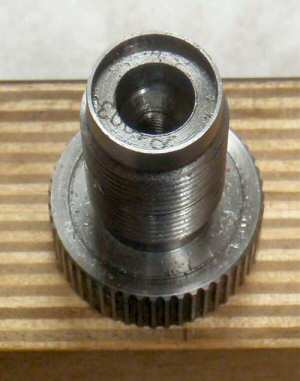 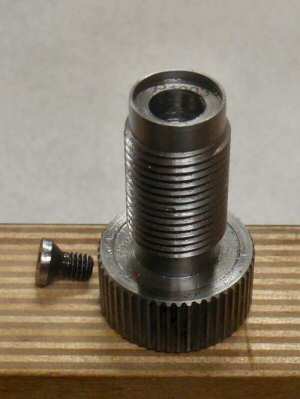 The flame channel is drilled using the appropriate drill for a 10-32 tap, then threads are made to receive the vent liner. Showing the Lehigh vent liner.  |
Originally Posted by rafsob
(Post 3754929)
I may be a little slow, but after looking at these little buggers in the link above, I don't get it. do they screw into the bottom of a bp? And if so why would this help with ignition? I would think they would close up or block the flash hole???
Where am I going wrong Mike? Forgive me but I am sure you have talked about this in detail, but I must have not got the memo!:confused0024: I have know idea how often any might replace a touch hole or even a percussion nipple, but contrary to what FG mifgt say or experiance they do wear.... maybe not wear out if you are not particular but they do wear and are replaced by a lot of folks. Well the flash hole in a regular BP is no different. The Vent Liner makes it replaceable and is a more reliable 'touch hole' in the long run. Here are a couple of basic CVA plugs that have been modified and vent liners installed. I believe it is a real benefit especially in a CVA plug, they are the softest metal plugs that I have every worked on. Being able to replace the Vent Liner (touch hole) goes alsong ways in keeping shots consistent over a long period of time. 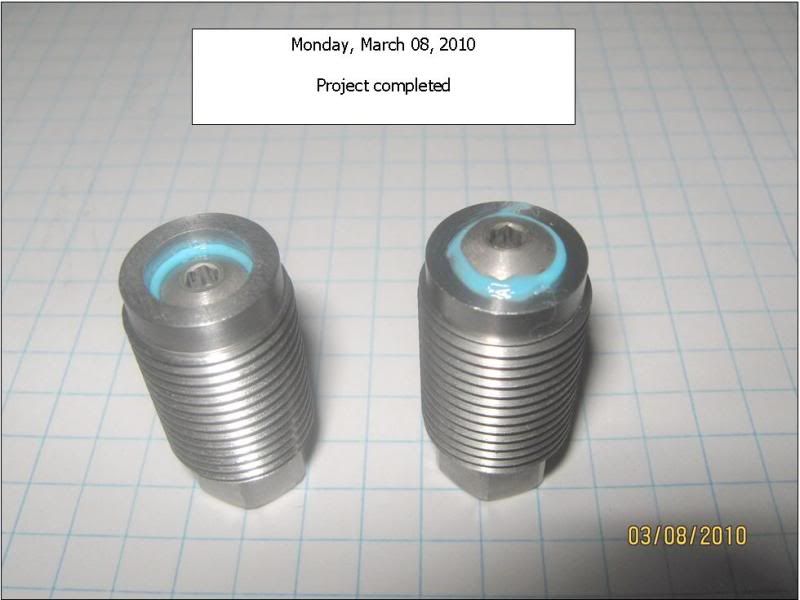 This is an Omega plug that I reworked for increased reliability with BH and the addition of a vent liner.... 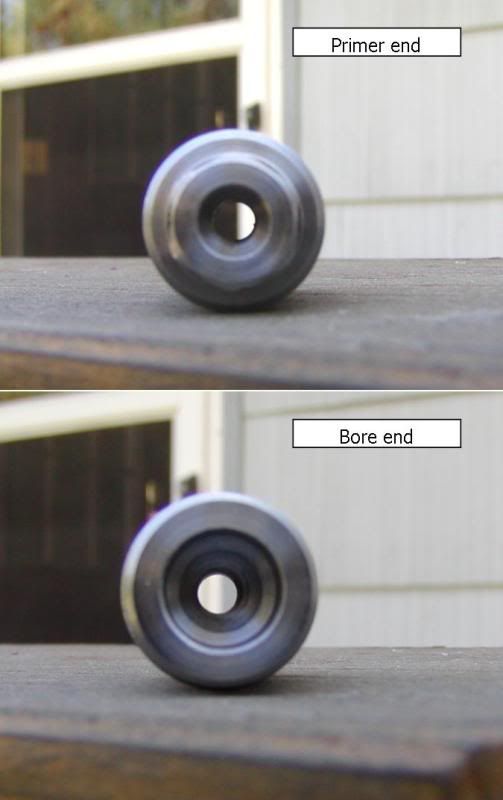 Is any of this necessary? That is only a question that you can answer. If you are not concerned or not having any problems - why bother? For my self when I am shooting BH I do eventually have a problem - the same problem reported by many other BH users... This might offer a cleaner view of what I am trying to do... 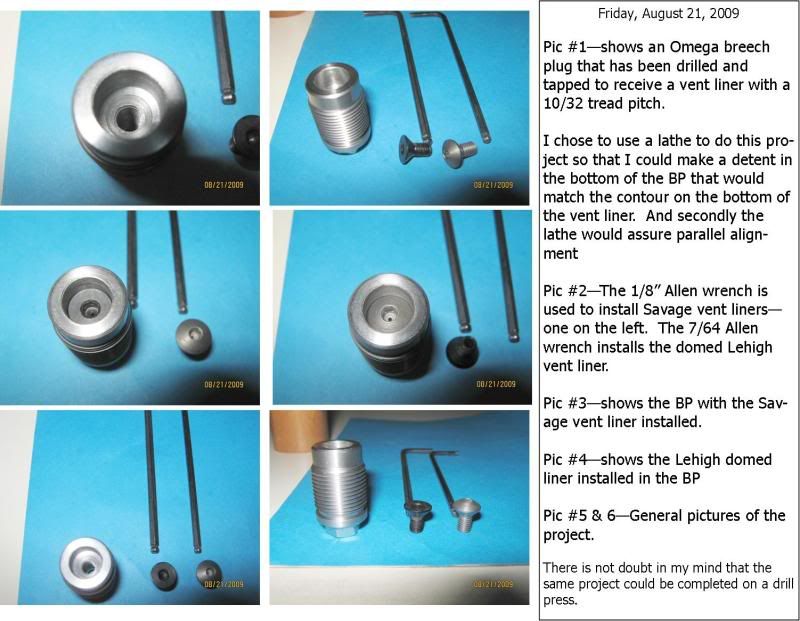 |
Thanks guys for the informative explanation. It is very clear to me now. I was having a problem with my Knight Vision, but when I switched over to the magnum primers, it corrected the problem.
Your rememdy seems to have fixed a problem and made a lot of folks happy that they now can use their guns with the powder they want to shoot. Great job guys. :party0005: |
| All times are GMT -8. The time now is 04:06 AM. |
Copyright © 2026 MH Sub I, LLC dba Internet Brands. All rights reserved. Use of this site indicates your consent to the Terms of Use.