
|
Explanation of Lehigh Bullets.
Tom,
Thankyou for the inquiry on why Lehigh Bullets uses brass instead of copper. I thought I would expand this to also include how the Lehigh bullets function. The design aspects of a good hunting bullet include: accuracy, initial penetration, expansion/energy transfer, organ destruction, and final penetration/perforation. Accuracy Accuracy is important for terminal performance as the bullet has to get to the intended location. Lehigh bullets are machined from barstock on cnc lathes. The bullets come off the machine complete with no secondary operations. The bullets are machined at around 8,000 rpm. Due to the bullet being formed while spinning, the concentricity of all the features is inherent in the process. The hollowpoint is centered on the outside diameter and the wall thickness is equal all around the bullet. This means the center of the geometry is equal to the axis of rotation which makes for an accurate bullet. A formed bullet, either a jacketed or formed solid copper bullet is made in a static process, it is not spinning. Manufacturing and tooling tolerances make it very difficult to keep the internal features like the hollowpoint at the true center axis. Most o these bullets are also produced on a press that may form 10-15 at a time. Each of those bullets have the potential for being slightly out of balance due to the different tooling each one sees. I am not stating you can not make an accurate bullet through the forming method; I am just stating it is easier to produce an accurate bullet by machining. The downside of machining bullets is the cycle time. Machining yields somewhere around 120 bullets per hour while forming can yield over 5,000 per hour. Initial Penetration The bullet must be stong enough to penetrate the animals hide and muscle boundary before expansion begins. Factors for consideration include the bullet weight, impact velocity, and the animals structure. Due to these variables, bullets have to be designed based on estimated averages which induces performance issues when game is taken at the extremes of where the bullet designers thought the bullet would be used. This effects all manufactures. Machining a bullet from brass enables us to very quickly change the design features like the hollowpoint and then test the result. Since the parameters are controlled by cnc code, it is very simple and fast to change from one design to another enabling the testing of many configurations in a single day to quickly arrive at an optimum design. This process takes much longer on formed bullets as changes are tooling dependent. New dies and punches must be produced for each trial and the equipment must be then setup and centered making it a long process to try to get to the optimum performance level. The investement in tooling is very large and that is why you may find a formed bullet manufacture producing a poorly performing bullet for sometime before changing the design. The tooling and machine may also limit the formed bullet manufacture on how strong they can make the nose for complete initial penetration. The forming machine may not have the power to form a jacket with sufficient wall thickness resulting with a bullet that begins expansion upon contact severly limiting the bullets terminal performance. Machining a brass bullet to any wall thickness is very simple. Exapnsion/Energy Transfer This phase of terminal performance is very similar in a Lehigh brass bullet and a copper or jacketed bullet. The process begins as the bullet contacts the animal and completes when the bullet is fully expanded. The nose or metplat, determines the initial energy transfer. Big, flat noses transfer an extreme amount of energy. Depending on the impact point, this energy may be sufficient to shut down the animals nervous system. While a large flat nose is the best design for intital energy transfer, it lowers the ballistic coefficient of the bullet resulting in velocity loss and making it more susceptable to wind conditions. Upon penetrating the hide and muscle layer, the bullet encounters tissue with a greater liquid content. This hydraulic pressure in the hollopoint cavity causes the nose to expand transfering additional energy to the animal. Expansion is complete when the upset growth stops which on a jacketed bullet could be a partial expansion or when the nose is completely folded back around the shank. Assuming a .500" diameter jacketed bullet, expansion may reach a frontal daimeter of 1.00". Lehigh bullets start expansion much in the same way. The bullets are designed to begin expansion upon the resulting hydraulic pressure. The nose petals are then designed to split the web of material between them. Once the petals achieve an angle of slightly less than 45 degrees, the petals separate from the base and radiate outward on independent trajectory paths. Remember all components of the bullet are still spinning. Organ Destruction In this phase there are some very distinct differences between a conventional formed/mushrooming bullet and a Lehigh brass bullet. As the Lehigh bullet's petals radiate outward, additional energy is transferred by each of the six petals. The petals have sharp cutting edges, and coupled with the spinning action, they are devastating to all tissue encountered leading to massive organ damage. The radial pattern will normally extend over 10". A customer recently tested the bullets on a bison and using a metal detector found petals 18" from the base path. Organ destruction was enormous. Often there is sufficient enrgy in the petals to penetrate the offside hide. A convetional mushrooming bullet can only effect tissue near its path through the animal. A 10" wide path of destruction has a greater terminal effect that a 1" path. Please note we are not advocating using the controlled fracturing feature for a hunter to take marginal shots, we are just exteding the killing performance of a well-placed shot. Final Penetration/Perforartion The increased frontal diameter of a mushroomed bullet severly impares additional penetration. The increase surface area slows the bullet down quickly and imperfect mushrooming where one side expands further than the other results in the bullet veering off the inteded course. A large radiused nose also tends to follow the path of least resistance which pulls the bullet off course. If you look at most African game solids, the nose has a large flat which punches through bone and keeps the bullet tracking straight. Once the controlled fractuing of the petals on the Lehigh bullet is complete, the bullet shank continues penetrating with a frontal diameter equal to the bullet diameter. The new nose of the bullet is flat, the best shape for straight line penetration and the cicumference edge around the face is sharp allowing the bullet to cut cleanly and to punch through bone without course variation. The Lehigh bullet shank is designed to retain sufficient energy to completely penetrate the offside hide providing an exit bloodtrail. In summary, the controlled fracturing of the Lehigh bullet is very different from what we have been conditioned to believe is the optimal performace. The terminal performance of the Lehigh's is devastating and much different than a mushrooming bullet. We are not going to get everyone to drink the Lehigh Koolaide, but I hope over time that people will see through experience that the Lehigh terminal performance is superior. As a bullet designer I have the responsibility to game of creating the most effective bullet possible - this is a responsibility I take very seriously. Thanks for your inquiry and I hope my explanation was clear. Dave Fricke [/align] |
RE: Explanation of Lehigh Bullets.
ORIGINAL: Grouse45 Tom, Thankyou for the inquiry on why Lehigh Bullets uses brass instead of copper. I thought I would expand this to also include how the Lehigh bullets function. The design aspects of a good hunting bullet include: accuracy, initial penetration, expansion/energy transfer, organ destruction, and final penetration/perforation. Accuracy Accuracy is important for terminal performance as the bullet has to get to the intended location. Lehigh bullets are machined from barstock on cnc lathes. The bullets come off the machine complete with no secondary operations. The bullets are machined at around 8,000 rpm. Due to the bullet being formed while spinning, the concentricity of all the features is inherent in the process. The hollowpoint is centered on the outside diameter and the wall thickness is equal all around the bullet. This means the center of the geometry is equal to the axis of rotation which makes for an accurate bullet. A formed bullet, either a jacketed or formed solid copper bullet is made in a static process, it is not spinning. Manufacturing and tooling tolerances make it very difficult to keep the internal features like the hollowpoint at the true center axis. Most o these bullets are also produced on a press that may form 10-15 at a time. Each of those bullets have the potential for being slightly out of balance due to the different tooling each one sees. I am not stating you can not make an accurate bullet through the forming method; I am just stating it is easier to produce an accurate bullet by machining. The downside of machining bullets is the cycle time. Machining yields somewhere around 120 bullets per hour while forming can yield over 5,000 per hour. Initial Penetration The bullet must be stong enough to penetrate the animals hide and muscle boundary before expansion begins. Factors for consideration include the bullet weight, impact velocity, and the animals structure. Due to these variables, bullets have to be designed based on estimated averages which induces performance issues when game is taken at the extremes of where the bullet designers thought the bullet would be used. This effects all manufactures. Machining a bullet from brass enables us to very quickly change the design features like the hollowpoint and then test the result. Since the parameters are controlled by cnc code, it is very simple and fast to change from one design to another enabling the testing of many configurations in a single day to quickly arrive at an optimum design. This process takes much longer on formed bullets as changes are tooling dependent. New dies and punches must be produced for each trial and the equipment must be then setup and centered making it a long process to try to get to the optimum performance level. The investement in tooling is very large and that is why you may find a formed bullet manufacture producing a poorly performing bullet for sometime before changing the design. The tooling and machine may also limit the formed bullet manufacture on how strong they can make the nose for complete initial penetration. The forming machine may not have the power to form a jacket with sufficient wall thickness resulting with a bullet that begins expansion upon contact severly limiting the bullets terminal performance. Machining a brass bullet to any wall thickness is very simple. Exapnsion/Energy Transfer This phase of terminal performance is very similar in a Lehigh brass bullet and a copper or jacketed bullet. The process begins as the bullet contacts the animal and completes when the bullet is fully expanded. The nose or metplat, determines the initial energy transfer. Big, flat noses transfer an extreme amount of energy. Depending on the impact point, this energy may be sufficient to shut down the animals nervous system. While a large flat nose is the best design for intital energy transfer, it lowers the ballistic coefficient of the bullet resulting in velocity loss and making it more susceptable to wind conditions. Upon penetrating the hide and muscle layer, the bullet encounters tissue with a greater liquid content. This hydraulic pressure in the hollopoint cavity causes the nose to expand transfering additional energy to the animal. Expansion is complete when the upset growth stops which on a jacketed bullet could be a partial expansion or when the nose is completely folded back around the shank. Assuming a .500" diameter jacketed bullet, expansion may reach a frontal daimeter of 1.00". Lehigh bullets start expansion much in the same way. The bullets are designed to begin expansion upon the resulting hydraulic pressure. The nose petals are then designed to split the web of material between them. Once the petals achieve an angle of slightly less than 45 degrees, the petals separate from the base and radiate outward on independent trajectory paths. Remember all components of the bullet are still spinning. Organ Destruction In this phase there are some very distinct differences between a conventional formed/mushrooming bullet and a Lehigh brass bullet. As the Lehigh bullet's petals radiate outward, additional energy is transferred by each of the six petals. The petals have sharp cutting edges, and coupled with the spinning action, they are devastating to all tissue encountered leading to massive organ damage. The radial pattern will normally extend over 10". A customer recently tested the bullets on a bison and using a metal detector found petals 18" from the base path. Organ destruction was enormous. Often there is sufficient enrgy in the petals to penetrate the offside hide. A convetional mushrooming bullet can only effect tissue near its path through the animal. A 10" wide path of destruction has a greater terminal effect that a 1" path. Please note we are not advocating using the controlled fracturing feature for a hunter to take marginal shots, we are just exteding the killing performance of a well-placed shot. Final Penetration/Perforartion The increased frontal diameter of a mushroomed bullet severly impares additional penetration. The increase surface area slows the bullet down quickly and imperfect mushrooming where one side expands further than the other results in the bullet veering off the inteded course. A large radiused nose also tends to follow the path of least resistance which pulls the bullet off course. If you look at most African game solids, the nose has a large flat which punches through bone and keeps the bullet tracking straight. Once the controlled fractuing of the petals on the Lehigh bullet is complete, the bullet shank continues penetrating with a frontal diameter equal to the bullet diameter. The new nose of the bullet is flat, the best shape for straight line penetration and the cicumference edge around the face is sharp allowing the bullet to cut cleanly and to punch through bone without course variation. The Lehigh bullet shank is designed to retain sufficient energy to completely penetrate the offside hide providing an exit bloodtrail. In summary, the controlled fracturing of the Lehigh bullet is very different from what we have been conditioned to believe is the optimal performace. The terminal performance of the Lehigh's is devastating and much different than a mushrooming bullet. We are not going to get everyone to drink the Lehigh Koolaide, but I hope over time that people will see through experience that the Lehigh terminal performance is superior. As a bullet designer I have the responsibility to game of creating the most effective bullet possible - this is a responsibility I take very seriously. Thanks for your inquiry and I hope my explanation was clear. Dave Fricke [/align] Chap |
RE: Explanation of Lehigh Bullets.
I'm not sure if the different weight bullets make a difference. I think the 250grn bullet ends up 225grns????? Not sure.
|
RE: Explanation of Lehigh Bullets.
A very intersting read there Grouse. Makes me think of a lot of different things, but I guess when you consider all of this, it makes sense. Something to think about. I will be very interested to see how they do for you in your hog hunt.
|
RE: Explanation of Lehigh Bullets.
So they actually designed the bullet to fragment the whole front portion of the bullet on impact?... Doesn't sound superior to me. As a matter of fact, he mentions several times that Lehigh Bullets perform "much in the same way" as copper and jacketed bullets. Yes, jacketed bullets fragment some when they hit bone but they aren't designed to do so. And every recovered copper bullet I have seen has been perfectly expanded and has lost very, very little of it's weight... if any at all.There's nothing in that Lehigh description that spells out "superior".
Thanks for the info Grouse, I'm just giving my opinion. |
RE: Explanation of Lehigh Bullets.
If there ever was a perfect bullet, it still would not be perfect for everyone.:D
|
RE: Explanation of Lehigh Bullets.
If one of those petals can travel 18", then you have the very good possibility of having the paunch ruptured even on a well place shot. I've had that happen from bone fragments, but I would not want that as likely possibility from a bullet.
|
RE: Explanation of Lehigh Bullets.
If one of those petals can travel 18", then you have the very good possibility of having the paunch ruptured even on a well place shot. I've had that happen from bone fragments, but I would not want that as likely possibility from a bullet. |
RE: Explanation of Lehigh Bullets.
ORIGINAL: Semisane If one of those petals can travel 18", then you have the very good possibility of having the paunch ruptured even on a well place shot. I've had that happen from bone fragments, but I would not want that as likely possibility from a bullet. +2 |
RE: Explanation of Lehigh Bullets.
ORIGINAL: marshall9779 If one of those petals can travel 18", then you have the very good possibility of having the paunch ruptured even on a well place shot. I've had that happen from bone fragments, but I would not want that as likely possibility from a bullet. |
RE: Explanation of Lehigh Bullets.
Here are some pics from Lehigh's site regarding the seperation:
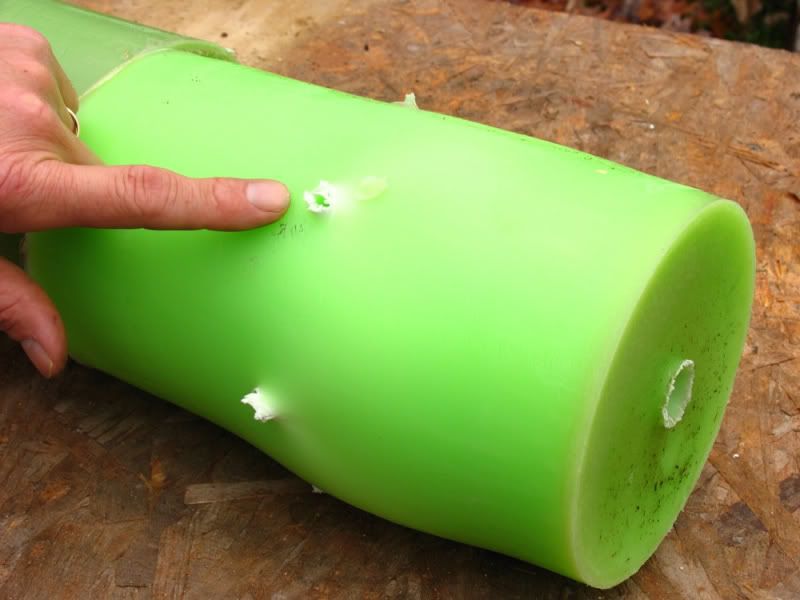 Brass vs Copper 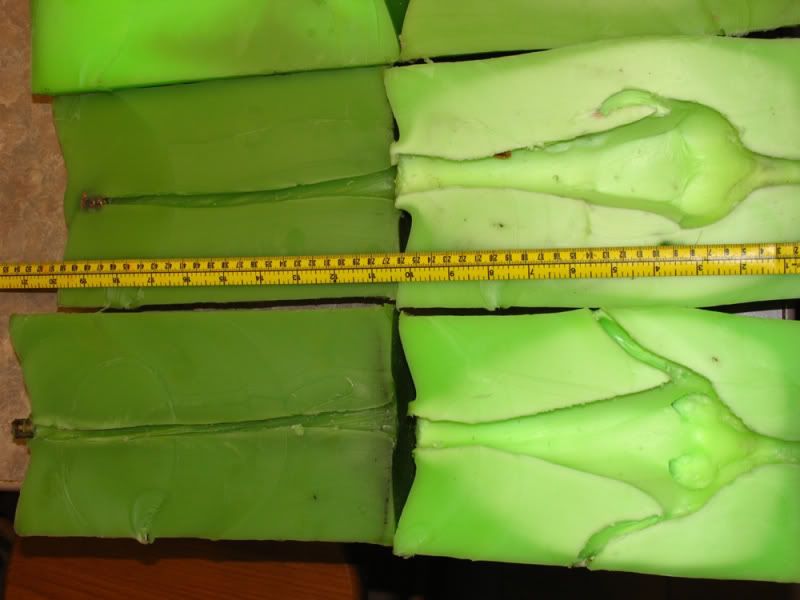 http://lehighbullets.com/information/technicaldata.htm |
RE: Explanation of Lehigh Bullets.
TNHagies
I cleared the same picture up a bit and labeled a couple of things, namely the bullets location in the jell 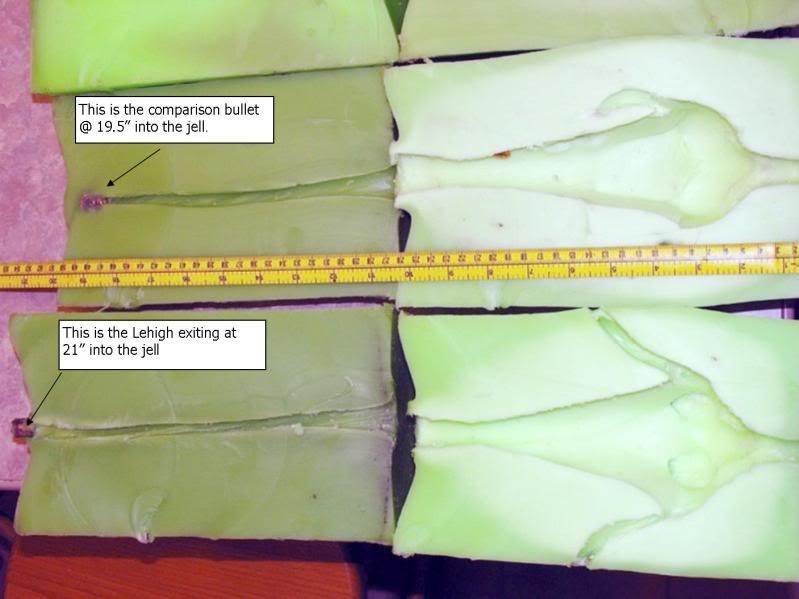 |
RE: Explanation of Lehigh Bullets.
That's an interesting comparison. Before I make any final judgement on the bullet I would want to try/know a couple things with it...
#1 accuracy (if the bullet is not accurate, then it has no place for me) #2 penetation (from the above test photos it looks like the bullet does real well there) #3 wound channel (again, from the photo above it looks like it takes care of that problem real well) #4 shock value to real time animals. (foam and ballistic gel are all fine and good, but I want to see how it works on in the field animals.) |
RE: Explanation of Lehigh Bullets.
ORIGINAL: cayugad That's an interesting comparison. Before I make any final judgement on the bullet I would want to try/know a couple things with it... #1 accuracy (if the bullet is not accurate, then it has no place for me) #2 penetation (from the above test photos it looks like the bullet does real well there) #3 wound channel (again, from the photo above it looks like it takes care of that problem real well) #4 shock value to real time animals. (foam and ballistic gel are all fine and good, but I want to see how it works on in the field animals.) |
RE: Explanation of Lehigh Bullets.
ORIGINAL: Grouse45 ORIGINAL: cayugad That's an interesting comparison. Before I make any final judgement on the bullet I would want to try/know a couple things with it... #1 accuracy (if the bullet is not accurate, then it has no place for me) #2 penetation (from the above test photos it looks like the bullet does real well there) #3 wound channel (again, from the photo above it looks like it takes care of that problem real well) #4 shock value to real time animals. (foam and ballistic gel are all fine and good, but I want to see how it works on in the field animals.) Well said Cayugad. This is obviously a different way to think about bullet performance. It will take some getting used to by most.Others will not want to venture into something so different no matter what. So...it will come down to performance on animals if the other issues are satisfied. And even then, if reports are great, movement to using this bullet will more than likely be slow. Grouse45, Good info. Once again looking forward to your hog hunt! :D |
RE: Explanation of Lehigh Bullets.
There's also another factor to the above gel test. Not saying this is the case but being the constant skeptic, until unbiased data presents itself, there's no telling what variables factored into the results of that test. The test was obviously conducted by Lehigh or someone affiliated with Lehigh, therefore the information is suspect from the get go. I'm not saying they canned the results but there's no telling what bullets were actually used, what powder charges, how the gellatin was mixed, etc... All manufacturers skew their in-house tests somewhat. ALL OF THEM. For example, the rifle shooting the copper projectile could have been loaded with a lesser powder charge and therefore the projectile didn't penetrate as deep. I know it sounds paranoid but I'm just a realist. Their obviously not going to post test results on their website that show their product being outperformed by another product.
Hopefully Grouses hog hunt will clear a lot of this up. As hard as a brass bullet must be, I have no doubt it will penetrate well, but what it does on it's way out is what I'm really anxious to see. I'd really like to see the entry wound, exit wound(s), and the damage done to the inside. |
RE: Explanation of Lehigh Bullets.
SWThomas
Thought I posted that once already... These are from a 50 BMG and the deer was at 860 yards - so you can pretty much say that a brass pointy Lehigh works... Here is the inny...  And here is the outy...  But again it was taken by Dave Fricke of Lehigh |
RE: Explanation of Lehigh Bullets.
ORIGINAL: sabotloader SWThomas Thought I posted that once already... These are from a 50 BMG and the deer was at 860 yards - so you can pretty much say that a brass pointy Lehigh works... Here is the inny... And here is the outy... But again it was taken by Dave Fricke of Lehigh Ya Butt, Dave coulda doctored this kill with his huntin nife, ta make it look like dat...and problee shot it at 50 yards anaway.....   |
RE: Explanation of Lehigh Bullets.
Lane
That is the problem with these forums I really can tell if you are serious @ suggesting that Dave doctored the photos? If you are... I guess I really mis-judged you... my-bad Here is a couple of more - 510 yards on Red Stag - but again a 50bmg   |
RE: Explanation of Lehigh Bullets.
ORIGINAL: sabotloader Lane That is the problem with these forums I really can tell if you are serious @ suggesting that Dave doctored the photos? If you are... I guess I really mis-judged you... my-bad Here is a couple of more - 510 yards on Red Stag - but again a 50bmg
Sabotloader This was obviously conducted by Lehigh or someone affiliated with Lehigh, therefore the information is suspect from the get go. I'm not saying they canned the results but there's no telling what bullets were actually used, what powder charges,..... Therefore, I Automatically suspect foul play and such, and question boldly the integrity of folks I've never met, and I try to cast doubt in the minds of all who read my postings, and then I hide behind the anonymity of the internet. [8D]:eek: |
RE: Explanation of Lehigh Bullets.
ORIGINAL: LaneNebraska ORIGINAL: sabotloader Lane That is the problem with these forums I really can tell if you are serious @ suggesting that Dave doctored the photos? If you are... I guess I really mis-judged you... my-bad Here is a couple of more - 510 yards on Red Stag - but again a 50bmg
This was obviously conducted by Lehigh or someone affiliated with Lehigh, therefore the information is suspect from the get go. I'm not saying they canned the results but there's no telling what bullets were actually used, what powder charges,..... Therefore, I Automatically suspect foul play and such, and question boldly the integrity of folks I've never met, and I try to cast doubt in the minds of all who read my postings, and then I hide behind the anonymity of the internet. [8D]:eek: |
RE: Explanation of Lehigh Bullets.
I agree about manufactuers twisting the results to make them look better. I'm sure everyone does it... For example, look at the gel pics that I posted. The Lehigh gell is seperated by about a 1/2 in from exit/entrance of the two gells, where the copper bullet butts up against each other. Maybe that was accidental, I don't know, but it just casts doubt on the resutls. But at this point, it's all we have so it's worht looking at.
That's what's great about the forum here. When Sabotloader does his tourture test I will KNOW that I can trust the results. He isn't paid by Lehigh and has nothing to gain by making these bullets look better than what tehy are. Sooooooo hurry up Sabotloader :D:D |
RE: Explanation of Lehigh Bullets.
ORIGINAL: LaneNebraska ORIGINAL: sabotloader Lane That is the problem with these forums I really can tell if you are serious @ suggesting that Dave doctored the photos? If you are... I guess I really mis-judged you... my-bad Here is a couple of more - 510 yards on Red Stag - but again a 50bmg
Sabotloader This was obviously conducted by Lehigh or someone affiliated with Lehigh, therefore the information is suspect from the get go. I'm not saying they canned the results but there's no telling what bullets were actually used, what powder charges,..... Therefore, I Automatically suspect foul play and such, and question boldly the integrity of folks I've never met, and I try to cast doubt in the minds of all who read my postings, and then I hide behind the anonymity of the internet. [8D]:eek: As for "questioning boldly the integrity of folks I've never met"..... I've never met Barry Bonds, Tim Geitner,or anyone currently incarcerated in my local state prison, but I damn sure question their integrity. And as far as "and then I hide behind the anonymity of the internet".... If I'm hiding, that means you are too and so is everyone else on the internet. So that point is... well..... pointless. I'll be at the hog hunt that Modern Muzzleloaders is putting on in Crossville, TN. If anyone would like to meet me or confront me, they're more than welcome to show up. I'd be happy to answer any questions in person....:D Anonymity that..... |
RE: Explanation of Lehigh Bullets.
SW & everyone else - including ME
PLEASE It is getting way to personal - lets just let this drop... and move on to something else. There are way to many good things to talk about |
RE: Explanation of Lehigh Bullets.
How can one little bullet cause so much trouble?[:o]
Torture test! Hog hunt! Patience! ;) |
RE: Explanation of Lehigh Bullets.
I really do not see any problem here. The bullet was presented with the fact we currently have been told about them. That's what forums do. Some people like them, some are skeptical, some are open minded and willing to see what happens. If everything presented on these forums was accepted 100% and no one questioned any part of it, there really would not be much information presented, just opinions.
Instead of everyone getting excited over nothing. I personally am waiting for Grouse to go hog hunting with them. As people have told me, hogs are not a push over, they take a lot of killing, and this will be an excellent test for the bullet. So good luck Grouse, test that bullet, and shoot a big one. Don't forget your camera. :D Even better, SWThomas is going hog hunting. He can give a detailed report on the bullet he selected and how well it does. By the way, have you decided what you are going to be shooting? This could be a bullet face off... After all the facts are in, then I will make a decision that suits me and no one else. |
RE: Explanation of Lehigh Bullets.
Personally I am not going to decide whether or not a bullet is going to be effective from reports given by 2,3,5 even 10 people. I figure a couple of them will probably be a little biased anyway. For example, there are a lot of people who love powerbelts. I killed 5 deer with them without a single pass through and blood was scarce. Fortunately either I saw them drop or there was snow where I followed their tracks. I heard some good reports on powerbelts, thats why I used them. I am not using them anymore. As far as lehigh goes, I think you need to purchase them and judge for yourself if you choose to. I like the barnes and gold dots so I'll stick with them. They have been around long enough to be proven effective by more than a handfull of folks.
|
RE: Explanation of Lehigh Bullets.
ORIGINAL: cayugad I really do not see any problem here. The bullet was presented with the fact we currently have been told about them. That's what forums do. Some people like them, some are skeptical, some are open minded and willing to see what happens. If everything presented on these forums was accepted 100% and no one questioned any part of it, there really would not be much information presented, just opinions. Instead of everyone getting excited over nothing. I personally am waiting for Grouse to go hog hunting with them. As people have told me, hogs are not a push over, they take a lot of killing, and this will be an excellent test for the bullet. So good luck Grouse, test that bullet, and shoot a big one. Don't forget your camera. :D Even better, SWThomas is going hog hunting. He can give a detailed report on the bullet he selected and how well it does. By the way, have you decided what you are going to be shooting? This could be a bullet face off... After all the facts are in, then I will make a decision that suits me and no one else. |
RE: Explanation of Lehigh Bullets.
ORIGINAL: Old/New How can one little bullet cause so much trouble?[:o] |
RE: Explanation of Lehigh Bullets.
This forum used to be fun. What happened??[>:]
|
RE: Explanation of Lehigh Bullets.
ORIGINAL: SWThomas Perfect expansion, excellent accuracy,and absolutely no fragmentation. Best Wishes onyour hunt, sounds fun, and comes at about 6 months before next deer season. Will have to look into that myself. Chap |
RE: Explanation of Lehigh Bullets.
ORIGINAL: Rock Fish This forum used to be fun. What happened??[>:] PLEASE It is getting way to personal - lets just let this drop... and move on to something else. There are way to many good things to talk about His words remind me of Proverbs 25:11 New American Standard Bible (©1995) Like apples of gold in settings of silver Is a word spoken in right circumstances. There is a lot of good things (and good people) to talk about on this forum. Best Wishes, Chap |
RE: Explanation of Lehigh Bullets.
ORIGINAL: gleason.chapman ORIGINAL: SWThomas Perfect expansion, excellent accuracy,and absolutely no fragmentation. Best Wishes onyour hunt, sounds fun, and comes at about 6 months before next deer season. Will have to look into that myself. Chap  |
RE: Explanation of Lehigh Bullets.
ORIGINAL: Rock Fish This forum used to be fun. What happened??[>:] Rock Fish, I have visited so many sites looking at information on Muzzleloader hunting it's not even funny. Believe me when I say this, HNI Muzzleloader forum is about the best I have found for guys sharing information and helping each other out. I've learned so much just from this site and the members who contribute......they know who they are. It's a fun site, just weed through the BS sometimes. |
RE: Explanation of Lehigh Bullets.
sjs, How was the blood trail with only one hole?
|
RE: Explanation of Lehigh Bullets.
ORIGINAL: sjsfire Right on the money Chap. Although not a brisket shot but a high on the shoulder/neck area shot I found this Barnes Expander MZ as I was washing out the body cavity after field dressing, back by the off side rear leg. I might not switch to the Lehighs from the Barnes.....I really would like to get a hold of some Speer Gold Dots. I'm after the best bullet that shoots best for me.
I just bought 3 packs of 18 of the 300g Barnes MZ, on Knight's site for $14/pack: http://www.knightrifles.com/productdetail.aspx?id=326469 Last year, Traditions had packages of 18 of the MZs for Sale for $12 about this time of year. I bought 3 packages. So if you shop now, you can get good deals. I don't think you can beat Barnes MZ under 170 yards, but they gotta be accurate in your gun. They shoot well in my Knight and my Omega, and not so well in my Savage. However in my Savage the .458 Barnes TSX Flat Nose, 45/70 shoots excellent with a CR sabot, so I will shoot that bullet in the Savage and the MZ in the other inline guns (they are only $18 for 20 bullets at MidSouth). I have also found in my guns that the Gold dots don't do so well pushed hard, not sure why, but they don't. 70 or 80g of Goex works great for a 300g Gold Dot in my Flintlock. So each gun has it's own personality and what bullets and sabot it likes. There are some good bullet choices out there now, and that is great for the hunter. Chap  |
RE: Explanation of Lehigh Bullets.
ORIGINAL: MountainDevil54 sjs, How was the blood trail with only one hole? |
RE: Explanation of Lehigh Bullets.
The 300grn MZ expander is a fine bullet. When you start talking bullets and cost, a 300grn XTP can do anything that bullet can and maybe better.
|
RE: Explanation of Lehigh Bullets.
Grouse45
The 300grn MZ expander is a fine bullet. When you start talking bullets and cost, a 300grn XTP can do anything that bullet can and maybe better. Here is some fine examples of 300 grain Hornadys and exactly why i do not use them... They can come apart even at ML speeds - I do not like that.... Don't use them don't shoot anymore.. 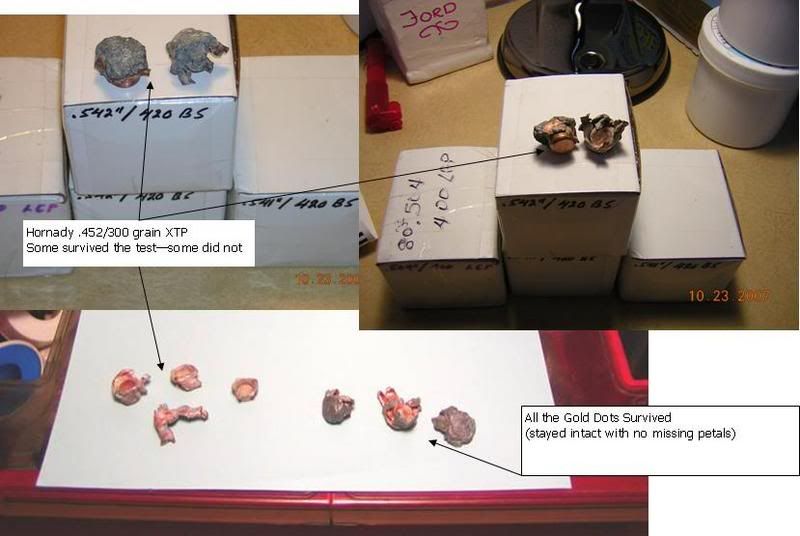 |
RE: Explanation of Lehigh Bullets.
ORIGINAL: Grouse45 The 300grn MZ expander is a fine bullet. When you start talking bullets and cost, a 300grn XTP can do anything that bullet can and maybe better. |
| All times are GMT -8. The time now is 11:04 AM. |
Copyright © 2026 MH Sub I, LLC dba Internet Brands. All rights reserved. Use of this site indicates your consent to the Terms of Use.