I got curious as I have always heard that if you find a bearded hen - yo have a chance at a multiple bearded tom. but I could not find any supporting data on my search.
I do know that some beards appear as a double or multiple but they are not. Each beard needs its own 'node' or point of attachment to the skin of the turkies body. Some beards just split but still have the same node.
I have taken 4 double beards on my hunting career from a few different states. I have one double on the wall next to my bearded hen.
Did find this
http://www.lsonews.com/hunting-news/...eards-on-birds
Much unknown about multiple beards on birds
Monday, 24 May 2010 06:44 Thomas Phillips, LSONews.com


 By Thomas Phillips/LSONews.com
A turkey with multiple beards is a rare thing, and it’s also a mystery.
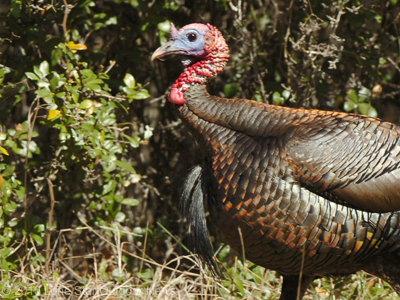
Turkeys with multiple=
“This, I guarantee, is a totally random occurrence,” said Bret Collier, a research ecologist at Texas A&M University. “There is no rhyme or reason or logic or environmental factor or what you feed them or where they’re born. It just happens.”
Beards are many things to many hunters, but to turkeys, they’re probably just fancy feathers. They grow continuously — and wear down continuously — so they cannot be used to determine age or dominance.
The rarity also has not been studied much, Collier said. It does not appear to effect individual survival or reproductive success.
“It’s an ornament,” he said.
A study from 1995 indicates beard length had no impact on female mate choice, Collier said. Mate choice is probably more a matter of attitude and body size. In other words, a turkey with a short beard can still get girls.
“Or it could be that you have this huge beard, and you’re a wuss,” Collier said.
A beard might help attract hens, said Scotty Parsons, a biologist with the National Wild Turkey Federation. But that is speculation, Parsons said, and no data support it.
Gobblers and hens both have the skin spot on their breast, called a papilla, for growing a beard but few females have beards — another enigma.
Little information is available on how often turkeys have multiple beards, Collier said. Researchers do not investigate multiple beards much, he said, because they appear to play little role, if any, in the species’ population dynamics.
“They (gobblers and hens) both have the area where it would grow off of, but it could be that there’s some sort of a factor that causes the growth to occur in males instead of females,” Collier said. “But it’s never been studied because it doesn’t really matter. Females with beards can still breed, and males without beards can still be successful.”
It really matters to hunters, though.
A turkey with an exceptionally long beard is a trophy. Harvesting one with multiple beards is a story to tell for years to come.
“It’s highly prized because it’s unusual,” said Robert Linder, the president of the Texas State Chapter of NWTF. “Unusual is always highly prized, which is why multiple beards is always talked about.”
In his years of hunting turkeys, Linder has only taken one multiple-bearded bird. It had two beards, one 9.5 inches, the other 6 inches, and he shot it near San Angelo.
“The more beards, the more exciting,” Linder said. “It makes for a great campfire tale.”
Multiple beards often are not discovered until a bird is examined after being shot, Linder said. Secondary beards are generally small and can hide tucked behind the dominant beard.
“Whether something is a trophy or not a trophy, that’s a human construct,” Collier said. “It doesn’t really matter to the bird. It’s just we think they’re cool.”
good example

taken from here
http://www.toledoblade.com/StevePoll...the-least.html