Originally Posted by
Muley Hunter
First off you have to ask........Is BH 209 2F or 3F? It might be different with T7 2F.
No, not really Muley, shooting T7-2f you will see about the same thing. Especially with a 300 grain bullet as you reduce the weight of the bullet the differences become even a bit more glaring with loads under 110 grains of powder. But as you cross the 120 grain loads the velocities of BH does increase but not very dramatically. But more importantly as Lee pointed out the PEAK pressure of BH is lower than T7, either 2f or 3f.
I have posted these results many time so they are probably getting old but they do go right along with Semi's and others findings...
I never did get time to complete the table for the 50 cal shoot but the 45 with a lighter bullet shows some of the same results.
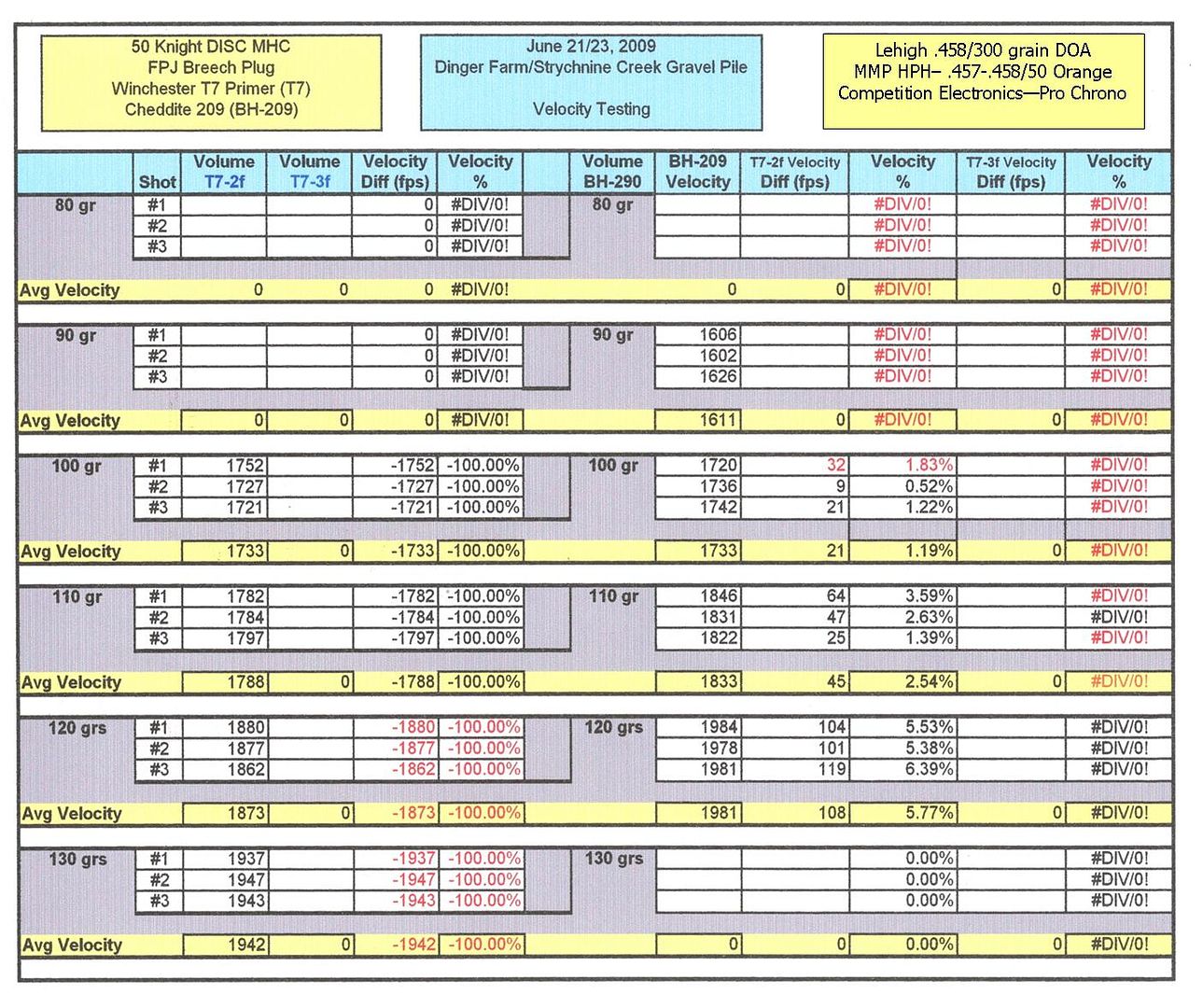
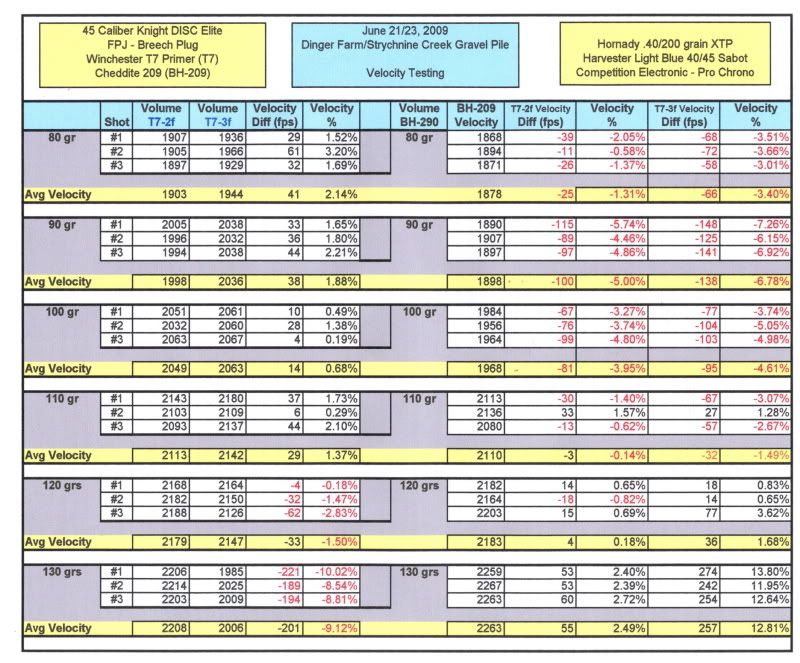
I'm guessing when I say this, but maybe this is how it went when they came up with the BH formula. I don't think it's a surprise to anyone that BH 209 is basically a form of smokeless powder detuned to BP velocities with some smoke added.
So, they wanted it to compete with the best sub available at the time. That would be T7. I believe T7 has stretched the velocity difference from real BP as far as they dared go, and still call it a BP sub.
I don't think they wanted to compare to T7 3F, because that's suppose to be for small calibers. They took T7 2F, and made it just a bit better without throwing up any red flags.
BH209 has many other advantages besides velocity. No swabbing, no crud ring, more consistent, and doesn't absorb moisture. They could have boosted velocity much higher, but kept it safe instead.
My .02
You forgot one other point BH was also built to bulky in size so that it would meter with real BP, that is very important so that it could qualify as a black powder substitute.