
|
Heh. Mr. Deer Hunter is quite entertaining :)
|
Not really.
|
In Texas bobcats are considered a varmint and as long as you aren't sellling the pelt you can shoot them anytime. LOTS of bobcats in Texas. Their mating season is in February.
Not sure why bobcats have such a mystique about them, they are pretty comparable to a coyote in predation, maybe even a little more capable. P.S. - For some reason I like bobcats over a coyote as well. I won't shoot a bobcat with my hunting rifle or during the summer or early fall because if I take one I want to keep it's pelt. Here's my Christmas present from Santa last year. 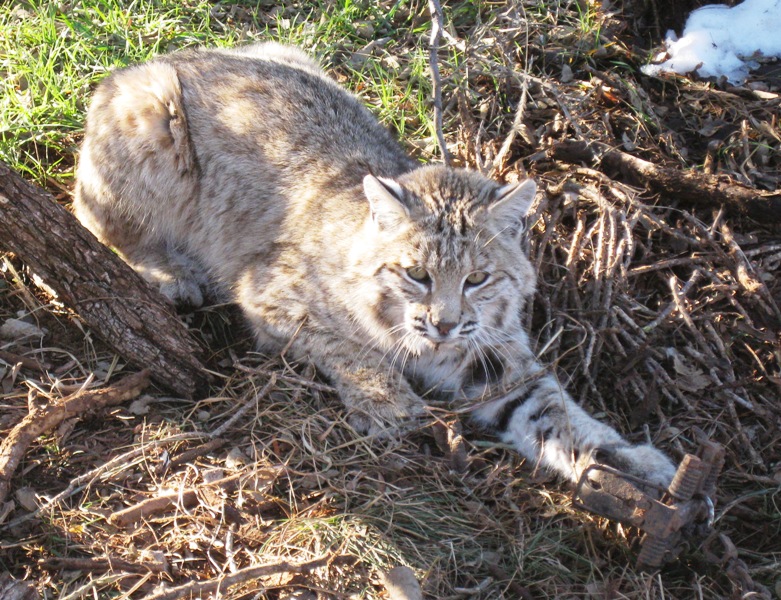 He sits with me in my office now. 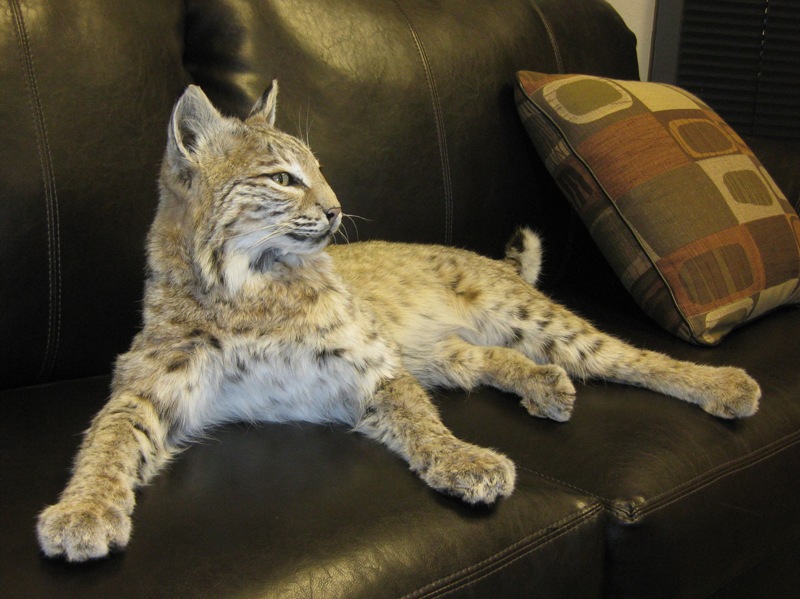 I've shot or trapped almost a dozen coyotes and never had the desire for one of them to sit in my office with me! ;) |
Originally Posted by sconnyhunter
(Post 3693715)
Mr. Deer Hunter, its is only logical that a Bobcat would love turkey poults. They are small, defenseless, and tasty. The logic that its alright to kill one for that reason is ludicrous at best.
Bobcats have been killing turkeys since before Man was a significant threat to wildlife on a large scale, in other words, for millions of years. To kill a bobcat as a form of "wildlife management" is not only illegal in some states,being that they are a regulated game animal in most states. It lends itself to a lack of responsibility as well. Also, it adds credence to the arguments of anti-hunters that we just want to hunt so we can kill something\anything. |
Bobcats impacting the deer herd?! Now thats funny! Some peoples kids wow............
|
So....... Are ya gonna shoot em?
|
Mr. Not Such a Good Deer Hunter,
If you would spend just 5 minutes on Google researching what you plan to post, you would come across as partially intelligent. As another poster said, bobcats have 1 litter per year...they weigh on avg. 15-20 lbs, hardly a threat to deer population. I'm with the OP, I think they are majestic, I leave them alone. |
Originally Posted by Mr. Deer Hunter
(Post 3693677)
WE had a camp with 106 acres and the Bobcats would come to the edge of the camp yard and watch us cut the grass. It was probably 3 years before i realized that it was a Bobcat and not just a regular old house cat.
|
I had a chance to take a bobcat with my bow last year but at the last minute, I couldn't pull the trigger, so to speak. I had plenty of reason to; the stupid thing was chasing squirrels around my stand and scared off a bunch of deer in the process. After it chased all of the squirrels up into the trees, it happened to look up and saw me. It stood there for a while shaking it's little bobtail looking at me and I stood there (in my stand) at full draw but I decided not to take it's life.
The bobcat had every right to be there and I felt who was I to take his (or hers) life just because I was irritated at him. He was just trying to survive like every other animal in the woods and I feel, if I'm not going to consume the animal or it's not threatening me or my family then I have no right to kill it. Bobcats are still somewhat rare in Northeastern Missouri and I doubt they have much of an impact on the deer or turkey population so killing them in the name of wildlife management is BS. Mr Deer Hunter, I doubt bobcats are killing off your grouse. I'd be more inclined to think a combination of a wet spring and summer, a crapload of bird-killing hawks (they're everywhere where I hunt), a decline in suitable habitat and feral cats (I kill those) are impacting you grouse population. I know that these factors have decimated the quail population in NE MO, so much so that during a typical quail hunt, I'd be lucky to see 1-2 covey's a day where we used to see 10-15. |
A UGA study at Kiawah Island, S.C. showed that not only were bobcats a major predator of whitetail fawns, but that they were actually keeping the deer population in check. From 2002 to 2003, the UGA study on Kiawah Island monitored 63 fawns. A whopping 81 percent of the fawns died, and bobcats killed half of them. The next-highest cause of fawn mortality at Kiawah Island was vehicles, which killed seven of the 63 fawns (11 percent). Research conducted on the Welder Wildlife Foundation from 1993-1998 indicate deer were found in bobcat scat from May through August. Deer were found in 5%, 32%, 24%, and 4% of bobcat scat collected in May, June, July, and August, respectively (Blankenship 2000). This corresponds to the fawn drop on the Welder Wildlife Foundation. Data show the birth period begins in May with the majority born in June (Blankenship et al. 1994). Larger mammals such as javelina (Tayassu tajacu) and feral hog (Sus scrofa) were found in the bobcat diet but many of these were also young animals. A study in Oklahoma monitored 35 radiocollared white-tailed deer fawns to determine causes of mortality. Twenty eight fawn mortalities were attributed to predation and 5 (15.2%) were identified as bobcat kills (Garner et al. 1976). People that think that bobcats aren't a source of fawn predation are kidding themselves. Since there quite a few less bobcats than coyotes, the number of fawns killed per bobcat is probably actually higher than the number of fawns killed by each coyote. Whether they are impacting your deer herd may still be a question, but between higher coyote populations and ever growing bobcat populations, recruitment rates on whitetail deer are very low in some areas. Some studies are showing that 80% of the fawns born each year don't make it more than 3 months with the vast bulk of those being lost to predation. This may not be the case in every area, but it is the case in many. Don't take my word for it, just do a google search and read some studies. |
| All times are GMT -8. The time now is 08:12 PM. |
Copyright © 2026 MH Sub I, LLC dba Internet Brands. All rights reserved. Use of this site indicates your consent to the Terms of Use.