
|
Let's Try Another One...
Since the other thread has blown up so bad thought I would try another one.
This is purely for information. If you choose not to read it really is not a big deal. This information was gathered and written by a author that has not stake in the prize. But, when I first found it did peak my interest about the developement of the Lehigh bullet. These are scanned pictures so you will have to magnify the page to be able to read the article, if you choose to do so. No-where here am I saying one bullet is better than another I would just like to present some information to those that might be interested. I hope this works out and you are able to read the information. 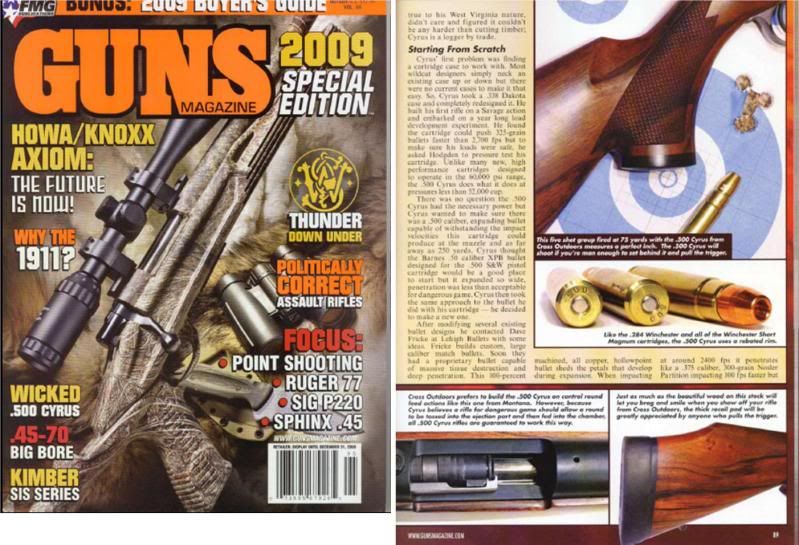 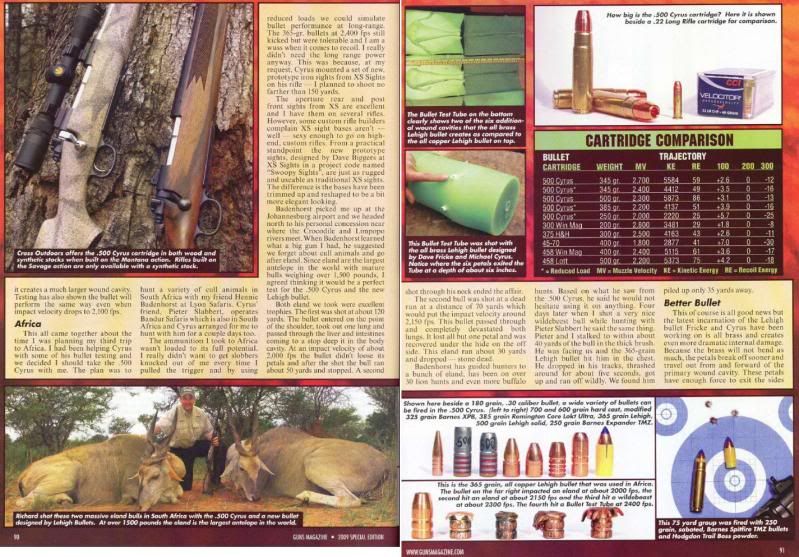 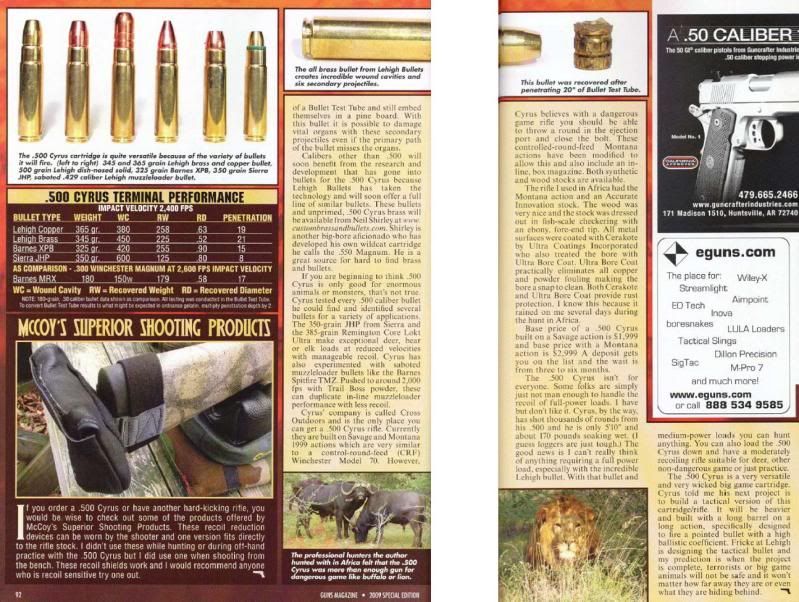 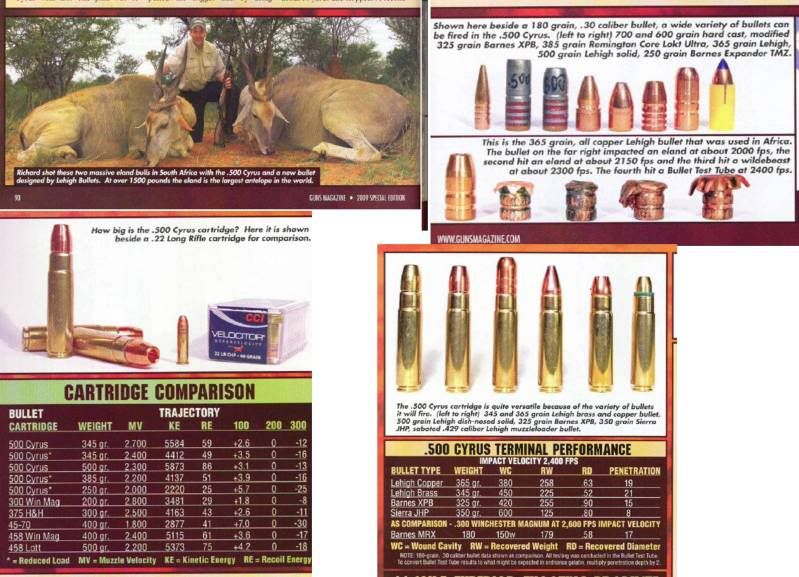 |
Can't read it.
Tell me what it says? |
Originally Posted by Muley Hunter
(Post 3803284)
Can't read it.
Tell me what it says? If you click on that arrow a drop down menu will appear and you can select differenc magnification levels. Click on 150% or 200% that should allow you read the text of the article. When you are done reading click the down arrow again and choose 100% again to return to normal. Basically this article explains the development of the bullet by Dave, it started out as a copper bullet and finally moved to the current brass design to acheive the necessay separation. And you can see it started out as a big bore centerfire bullet. It was later adapted to big bore ML... Other bullets are shown in the testing process. |
I know how to expand a page, but on my screen I can only expand so much and it gets blurry.
I saw a picture of a Barnes bullet. I thought maybe it compared? |
Originally Posted by Muley Hunter
(Post 3803296)
I know how to expand a page, but on my screen I can only expand so much and it gets blurry.
I saw a picture of a Barnes bullet. I thought maybe it compared? I should really say the article was written about the .500 Cyrus gun but in the developement of that gun the rifle maker looked for the ideal bullet from his gun. If you want to PM your email address to me I can send you the article in Word format and it magifies in that form much better. If I summerize the article it might be assumed by some that I am biased... of course I am, so I would like you guys to review it and make your own decisions. I just wish I still had the magazine. I wonder if I could pull up that article on line???? gotta go look. mike |
Hi Pete, I do have one question. I know all bullets have a range in velocity at impact at which they perform the best. Do you know what that range would be with the Lehighs?
Thanks, Art |
Originally Posted by flounder33
(Post 3803303)
Hi Pete, I do have one question. I know all bullets have a range in velocity at impact at which they perform the best. Do you know what that range would be with the Lehighs?
Thanks, Art I believe Dave can build the nose of the bullet to match a range of velocities that the bullet may be subjected to, as a matter of getting the best Terminal Performance. So with that in mind the optimum velocities ranges for the 250 - 275 -300 may be different for each bullet. The 40-200 that I used last season was a great test for that bullet. I shot a whitetail through the chest cavity @ 180 yards. It left the barrel right at 2200 fps and according to the ballistic tables it would be going about 1475 fps at that distance. It worked great. Two nice neat holes in and out and one heck of dark red pudding mix in the cavity. Part of the heart did survive but everything else was mush. I no this doesn't answer you question specifically but I know it is computed in the design process of the bullet. I will try to get the specific information from Dave. mike |
Thanks, Since I shoot at lower velocities than a lot of you I am mainly interested in how slow the bullet can travel and still perform.
Art |
Originally Posted by flounder33
(Post 3803308)
Thanks, Since I shoot at lower velocities than a lot of you I am mainly interested in how slow the bullet can travel and still perform.
Art does that make some sense? pete |
Did you know you can read GUNS magazine's digital editions on-line?
http://www.gunsmagazine.com/digital-editions/ Unfortunately, that issue is not available. |
Originally Posted by flounder33
(Post 3803308)
Thanks, Since I shoot at lower velocities than a lot of you I am mainly interested in how slow the bullet can travel and still perform.
Art |
Originally Posted by Semisane
(Post 3803317)
Did you know you can read GUNS magazine's digital editions on-line?
http://www.gunsmagazine.com/digital-editions/ Unfortunately, that issue is not available. |
Originally Posted by Semisane
(Post 3803317)
Did you know you can read GUNS magazine's digital editions on-line?
http://www.gunsmagazine.com/digital-editions/ Unfortunately, that issue is not available. |
Originally Posted by sabotloader
(Post 3803307)
Great question and I can not give that exact answer right off the top of my head, althought at one time I knew the answer.
I believe Dave can build the nose of the bullet to match a range of velocities that the bullet may be subjected to, as a matter of getting the best Terminal Performance. So with that in mind the optimum velocities ranges for the 250 - 275 -300 may be different for each bullet. The 40-200 that I used last season was a great test for that bullet. I shot a whitetail through the chest cavity @ 180 yards. It left the barrel right at 2200 fps and according to the ballistic tables it would be going about 1475 fps at that distance. It worked great. Two nice neat holes in and out and one heck of dark red pudding mix in the cavity. Part of the heart did survive but everything else was mush. I no this doesn't answer you question specifically but I know it is computed in the design process of the bullet. I will try to get the specific information from Dave. mike |
Originally Posted by flounder33
(Post 3803303)
Hi Pete, I do have one question. I know all bullets have a range in velocity at impact at which they perform the best. Do you know what that range would be with the Lehighs?
Thanks, Art |
Originally Posted by builder459
(Post 3803332)
After reading the data you supplied it just confirmed what was obvious to myself and many others already.since the petals break free from the bullet almost immediately on impact, what remains is a slug that is whatever dia the particular bullet happens to be that your using.
One video shows this action very distinctly. They have placed glass from a car windshield in front of the jell medium. The medium is not touching the glass but a few inches away from the the glass. Then to increase the degree of difficulty the glass shatter proof winsheild glass is placed on a 45* angle, which really, and often does cause a degree of deflection in copper/lead bullets, should have caused the bullet to veer off course some degree, which in the case of the Lehigh it did not it continued striaght into the medium. As it leaves the glas you can see the bullet has not began to expand in fact you can see the the nose is somewhat damaged, but as soon as it hits the liquid medium the expansion process begins and you can see a petal come out of the top of the block. As you watch the expansion (hydraulic movement and swelling of the block) you can imagine the shock, stress, and rupture that is going on. This video was especially shot to show the Lehigh nose will not expand going through a solid or semi solid object like hide or bone. hence the deeper penetration. totally understandable, and a top notch bullet by the way.other top notch bullets such as a nosler partition or Banes do not lose the petals, but in fact open up larger than the actual bullets dia, and yes they will not penetrate as far as the Lehigh. but IMHO actual do more damage while in the body cavity, due to this larger surface area, which is still cutting up internal organs while it's inside.i also feel the larger surface area causes more shock and trauma(simple physics).all that being said, all of the bullets This new theory, and it really is not new - Europeans have been using it for years, is really hard for us conventional mushrooming bullet folks to handle - it did not and i did not want to believe it either. It took a lot of experimentation and investigation on my part to trust it enough to try it. i mentioned are at the top of the heap.and should be considered by anyone looking for premium bullets.by every thing i have seen, the Lehigh bullet does not do any more internal damage than the bullets mentioned here.it may exit more often than the others, due to it's design.but that's about it. are any of these bullets the best? in there own unique ways i suppose they are.Lehigh didn't reinvent the bullet with this design. but they did design a darn and awful expensive one to boot:biggrin: Ray I think I can also tell the Lehigh has really impressed the American Military and other Government agencies. Might take a look at the Lehigh Defense web site. They are rebuilding it so it is not complete yet. |
Originally Posted by Muley Hunter
(Post 3803343)
I just got back. Good to see you got the answer. I don't shoot the Lehigh. I'm happy with the Thor bullets.
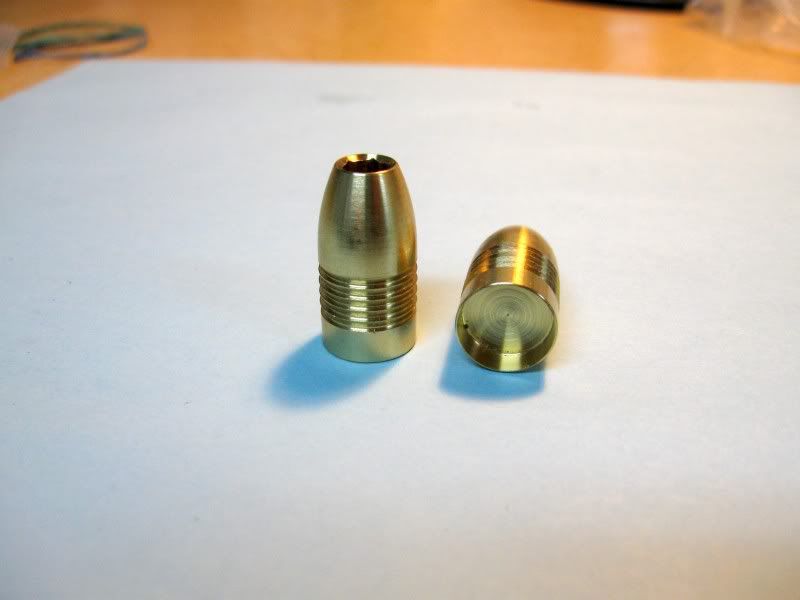 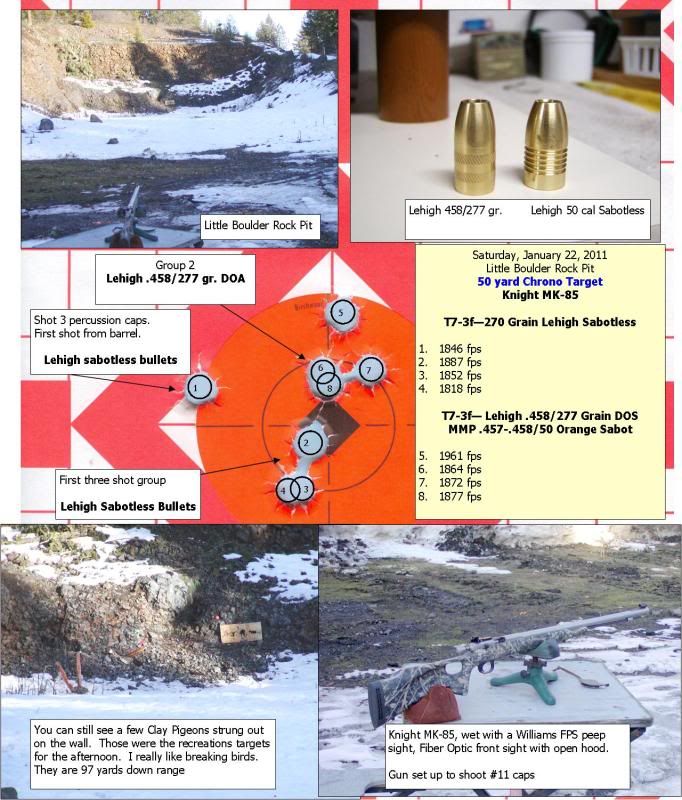 |
Originally Posted by sabotloader
(Post 3803345)
Ray that is incorrect, the petal do not break free or even really
begin to open until the bullet nose in a fluid medium. If you were to shoot this bullet into an elk through the shoulder bone the bullet would not really start expanding until it clears the hide, bone, muscle the enters the fluid medium of the chest cavity. Once in the chest the petals expand rapidly to the point then they break off and radiate outward. Even that does not occur immediately upon entering the chest cavity. Further the petals are so light they do not carry enough energy with them to pentetrate anything other than organ tissue. Once they contact muscle tissues forward progress stops almost immediately. One video shows this action very distinctly. They have placed glass from a car windshield in front of the jell medium. The medium is not touching the glass but a few inches away from the the glass. Then to increase the degree of difficulty the glass shatter proof winsheild glass is placed on a 45* angle, which really, and often does cause a degree of deflection in copper/lead bullets, should have caused the bullet to veer off course some degree, which in the case of the Lehigh it did not it continued striaght into the medium. As it leaves the glas you can see the bullet has not began to expand in fact you can see the the nose is somewhat damaged, but as soon as it hits the liquid medium the expansion process begins and you can see a petal come out of the top of the block. As you watch the expansion (hydraulic movement and swelling of the block) you can imagine the shock, stress, and rupture that is going on. This video was especially shot to show the Lehigh nose will not expand going through a solid or semi solid object like hide or bone. I believe and this 3rd article will confrm it you are incorrect on this point also. Do not get me wrong i shot Nosler's for years and very much respect what they will do and have done. But in my limited experiance using the Lehigh the damage or wound channel in the cavity is significantly larger. This new theory, and it really is not new - Europeans have been using it for years, is really hard for us conventional mushrooming bullet folks to handle - it did not and i did not want to believe it either. It took a lot of experimentation and investigation on my part to trust it enough to try it. Only to those that believe which ever bullet they choose to be the best well that is their best... When you say expensive remember the price you see includes shipping from Lehigh. If you were buying Nosler's at their regular price they would be very comparable. I think I can also tell the Lehigh has really impressed the American Military and other Government agencies. Might take a look at the Lehigh Defense web site. They are rebuilding it so it is not complete yet. |
What size does my bore need to be? I think it's pretty average right now.
What size are the bore size bullets? |
Originally Posted by Muley Hunter
(Post 3803352)
What size does my bore need to be? I think it's pretty average right now.
What size are the bore size bullets? I have not even tried one in a Knight DISC and I know they would not make it down my Omega or Truimph. Hopefully we will get back to them early this spring. |
Originally Posted by builder459
(Post 3803351)
My friend, we both agree to disagree and that is fine with me lol. one thing i and you alike know for certain.whatever animal hit by any of those bullets placed in the proper spot is DRT,finished and ain't going nowhere.i'm not going to spat with you over the finer details.we both presented our feelings on the subject in a civil manner.as i have said many times, it's a good quality bullet.NUFF SAID! Ray
And you know the other point... even if you or anyone else totally understood the working of the bullet it really doesn't matter. What matters is the confidence in your choice of bullet... Course you know... Semi would say were both nutzs - just shoot XTP's or Speers and be happy!:wave: |
Originally Posted by sabotloader
(Post 3803360)
Not a problem Ray, I respect your thought also... The only thing I will try to present is how the bullet works because there are so many incorrect thoughts about it, especially since it is new here...
And you know the other point... even if you or anyone else totally understood the working of the bullet it really doesn't matter. What matters is the confidence in your choice of bullet... Course you know... Semi would say were both nutzs - just shoot XTP's or Speers and be happy!:wave: |
| All times are GMT -8. The time now is 04:53 AM. |
Copyright © 2026 MH Sub I, LLC dba Internet Brands. All rights reserved. Use of this site indicates your consent to the Terms of Use.